Here’s a salutary lesson for all those writers who, like me, would ideally prefer to use plenty of description to describe places in their writing.
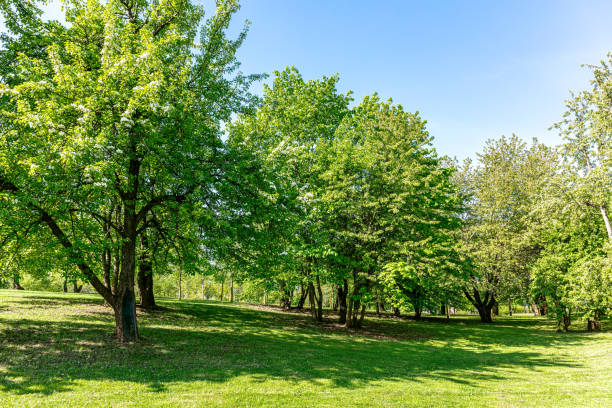
Think of a tree in a park. Done it? I am pretty confident that you will have and that, even though you were only asked a millisecond ago, you can see the tree and the park in great detail because it is somewhere you are already familiar with and all my exercise did was trigger the memory.
It does not really matter if you see a different tree to the one I envisage unless it is important for the story that its appearance is different, which usually it won’t be (the sadly-desecrated Sycamore Gap is an exception that proves the point).
So where does that leave description for the author? Well, increasing numbers of readers, particularly those in the ebook age, are saying that they want less description in favour of a story that moves quickly.
So how do you describe a place? Well, unless your descriptive powers are a thing of beauty (check out any crime novel by Peter May for what that looks like), it grieves me to say that you have to keep it short.
I would recommend honing in three key features, one a striking physical feature such as trees stretching out across a forested hillside, one focusing on light (is the landscape basking in bright sunlight or shrouded in fog?) and the third one related to weather (hot, cold, raining?).
By using them as your main building blocks, you can keep coming back to them to develop them if required but you did not allow the description to slow the passage down at the beginning.
And, yes, I wrote this with a heavy heart because I love writing description but everything is overruled by the main rule of writing – give the reader what they want!
You can check out more free tips in The Handy Hints section
Picture used courtesy of Pexlels (https://www.pexels.com/)
 John Dean - Crime Writer
Leave a comment