These Handy Hints sections are offered for emerging writers to use absolutely free of charge and
I will add to them from time to time.
Editing – When good books become great ones
I am editing one of my crime novels and am struck by the fact that it is not possible to over-estimate the importance of the process.
When I finish my final draft, and before I send it off to my publisher for their verdict, I always ask myself the same questions, for which the answer to each one has to be ‘yes’, because a strong ‘yes’ in one category does not make up for a wishy-washy ‘sort of’ in another. You cannot afford any weak links if you want someone to publish your work.
The questions are:
Plot: Does the book have a strong plot with enough twists and turns to keep the reader interested and does it feel like it could happen in the real world?
Atmosphere: Have you created enough atmosphere and tension to keep the reader engrossed?
The beginning: Do you grab the reader from the first lines?
The ending: Is the ending enough of a climax to satisfy the reader and does your final chapter wrap everything up effectively? That does not mean that you cannot leave some elements open-ended but normally you would only do that if you were planning to return to the plotline in another novel.
Characters: Does the book have realistic well-drawn characters rather than inadequately-depicted cliched cardboard cut-outs?
Place: Does the book have a strong sense of place, providing the reader with enough information to see the location but not overdoing it?
Pace: Does the story keep moving at a decent pace? Are there scenes that can come out because they duplicate similar ones?
The title: Have you picked a good title that sums up the story, one that gives the reader a sense of what kind of book it is? Ideally, titles should be no more than four or five words but there are plenty longer that indicate that it’s not a hard and fast rule, not least the Harry Potter books.
Accuracy: Yes, you are an author and, as such, are permitted to use artistic licence but if you are describing places, history, geography, organisations that exist etc, have you got your facts right? And if you decide to change some of those things, do you know enough to make the changes with confidence?
The minutaea: Have you done a thorough edit (too many errors will see an editor or agent wondering if there is too much to correct, compared with other manuscripts they have read that day and which are just as good)? Have you checked for clumsy sentence structure, poor grammar, incorrect spelling, characters whose names change half-way through without explanation (it happens more often than you might think), impossible chronology (eg characters who your novel says were a teenager when an event occurred, but the dates you have used mean that they would actually have been in their mid-twenties; mistakes like this happen frequently)?
Sometimes, an obsession with the minutaea can hide the big stuff. When my latest novel approaches publication, I spend a fair bit of time working with Joffe Books’ excellent editing team led by Polly. However, an author can become so proud of themselves for detecting a wrongly-placed tilde (an accent placed over certain words in some languages, but you all knew that already, of course) that they miss the big things. In one example, part of my book related to a character whose eventual role in the story, when revealed, was designed to shock the reader. There was nothing wrong with the writing as such (not a tilde in sight) but, as one of the editors pointed out, by dropping too many heavy hints, I had allowed the reader to work out the secret long before I eventually revealed it, something that was obvious when it was pointed out to me.
Repetition: Editing often throws up excessive repetition, an important consideration for authors, who often do not realise they are doing it. An author may not realise, for instance, that they have used the same phrase repeatedly, which will become an irritant that drives readers away. There are times when repetition is needed, however; for instance, one of my books featured a number of foreign criminals whose names may have been unfamiliar to readers. A degree of repetition of them was required to remind the reader who they were – but not overdone because there is a danger that the reader will say ‘enough already, we’re not stupid, you’ve told us who he/she is three times’.
The overall aim of the editing is to ensure that the manuscript is as good as it can be. I can easily make one or two thousand changes during the final editing process and the publisher’s editors will make a lot at their end as well. The end result will not be perfect, but if the editing is carried out properly, it will be closer than it was.
This is a free Handy Hint but if you want a book full of advice and do not mind paying a modest amount, you can buy John Dean on Writing in paperback and e-book formats, you can do so on Amazon.
July 6 2026
In search of perfection
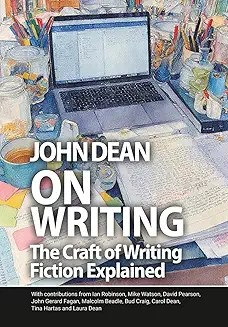
This is another of my free gratis Handy Hints for aspiring writers. Be brutal with your editing and aim for perfection, which is why I have done a further edit of my book On Writing about creating fiction and why Mark, the book designer, has reposted it on Amazon.
We didn’t actually have to do most of the changes, all small things (the book has hardly changed), but we were going to make some corrections anyway so took the opportunity as we strove for perfection. The book can be purchased in ebook and paperback formats.June 3 2026

Cut like crazy….
The latest in the series of my free pieces of advice for emerging writers.
Actually it starts with advice from novelist Sarah Waters, who said: ‘Cut like crazy. Less is more. I’ve often read manuscripts – including my own – where I’ve got to the beginning of, say, chapter two and have thought: “This is where the novel should actually start.” A huge amount of information about character and backstory can be conveyed through small detail. The emotional attachment you feel to a scene or a chapter will fade as you move on to other stories. Be business-like about it.”
It’s excellent advice. My take on the subject is that every line should drive the story forward. Ask yourself if the story needs the lines you are reading and if it doesn’t or you’re not sure, ask yourself ‘will the story still work if the passage is removed?’ If so, it’s worth considering bringing the delete button into play.
As I have mentioned before, even at the late editing stage an author still has to be prepared to be brutal with their words. In my case, the words that tend to become victims of the delete button turn out, when I analyse them, to be the ones which were written to increase the word count. Now, in the final edit, they must go because they’re unnecessary, usually excess dialogue or internal Point-Of-View passages that are not needed.
Does that mean I wasted my time writing them? Far from it, they were the words that triggered those many others that did survive. When they are removed in that final edit, it’s like removing the bits of scaffolding that kept the building up when you were still engaged on construction, but are now no longer needed. Removing them tends to give the remaining chapters extra pace and a sharper focus and, for me, the words that don’t make the final cut are just as important as those that do.
May 21 2026
Avoiding the comfort zone
I am a great believer that authors should avoid the comfort zone, that they continually stretch themselves. You may ask, when you have become comfortable with a way of writing, dare I even go as far as to say, feel that you have mastered it, why would you set yourself a new challenge? If you know what you are doing does it not make sense to keep doing it?
The answer is that writers and readers can become bored if they are not challenged and that can lead to complacency, lazy writing which runs the risk of turning your readers away.
So, how do you go about making those changes without straying too far from the storytelling that made you popular in the first place? Well as an example, I have been working on a novel featuring one of my regular characters and had noticed from the online reviews that readers had really grown to like him through the books in the series.
However, my original idea was that readers would be unsure about him, that on balance they liked him but that it was difficult to enjoy some facets of his personality. The solution to the comfort zone conundrum? Focus for this novel on one of the parts of his personality that was less likely to attract readers, which challenges them and keeps me interested as it threw up a sub-plot (and, for the record, I dislike this part of his character, too).
It’s a gamble in some ways but I think the readers will stick with him because they realise that no one is perfect.
May 9 2026
Understanding crime fiction
Publishing has become ever more complex and emerging writers trying to break into the crime fiction market are an example of the need for them to know exactly what they write.
It is no longer enough to pitch to a publisher or agent saying that you write ‘crime’ because the category has become more complicated and the publisher/agent expects to see evidence that you realise that.
So, to help out, here are some of the categories:
Cosy crime – these are very popular, usually set in a middle-class environment, all spinsters and vicars, and often revolving around a murder that’s solved by a private detective. The ‘cosy’ bit comes largely because the authors avoid the gory stuff (but not always) = think Jane Marple, Agatha Christie’s creation
Hard-boiled – graphic, gruesome and unsentimental, they often feature psychopaths, serial killers and flawed detectives – and dialogue or inner monologues so sharp that you could cut your finger on them. No one does it better than the classic American writers, although the UK has a few that push them close (to see a classic UK example, it’s worth reading Brighton Rock by Graham Greene)
Private detective – as it sounds – think Hercule Poirot and Sherlock Holmes
Locked room – featuring crimes in which the dead person/murderer could not possibly escape a room where the door is locked (think Jonathan Creek)
Courtroom – based on trials and using plenty of flashbacks, they usually feature judges, barristers and legal teams
Spy – the action centres on espionage. Usually feature spies working for intelligence organisations – think John le Carre. No one did it better
Caper – told from the criminal’s point of view with the main focus of the story being their crime and their attempts to avoid capture. Lots of action and often plenty of humour
Police procedural – these novels focus on the work of the police to identify the perpetrator and include lots of detail about crime detection, interview and forensic techniques. The main character is usually a detective.
These are actually very broad categories and, if you do your own research, you will find that the genre sub-divides time and time again.
I know exactly what I write, namely police procedural stories told from the viewpoint of police officers, usually detectives. This is because, before I started writing crime novels, part of my newspaper career was as a crime reporter then, when I set up my freelance business with my wife Frances, a significant proportion of my work was covering crime for newspapers and specialist magazines.
That experience gave me a valuable insight into not just police procedure but, more importantly, into how the police officer’s mind works, which gives my work an authenticity which makes the stories real.
April 30, 2065
Questions, questions…

Writing fiction throws up all sorts of interesting quandaries for the author such as how much, if any, of your characters can be based on real people, what can you learn by staring at trees when it comes to judging the amount of description you use, how do you avoid confusing your reader when it comes to complicated plots, what’s the big no-no when it comes to writing science fiction and which genres are worth experimenting with if you’re not sure where to start writing and would like to try one which is offering lots of opportunities for emerging writers?
All these questions and dozens more are addressed in On Writing, my quirky view of the craft of writing fiction which can be purchased in ebook and paperback formats on Amazon.
April 28 2026
Why every author needs an Aunt Ethel
I am currently working with the editing team at the Book Folks, a Joffe Books imprint, on the latest DCI Blizzard novel, due out later this year, and it’s a reminder that editing catches the little things, eg wrong spellings, but also the bigger things.
In this case the editor, the excellent Polly, worked out the shock identity of the killer long before it was revealed by me as the author. It’s the advantage of someone coming to the story for the first time and seeing something the writer missed because they were so engrossed in the writing process.
The solution? Less hints about the identity and those passages. that did survive were pushed further back and phrased in a more subtle way so that the (hopefully) stunned reader did not find it as easy to guess.
Another handy hint which has.emerged from editing the latest DCI Blizzard relates to explanation.
The challenge emerges, as in this case, when you are explaining something to those readers (but not all readers, another complication) who do not understand modern phenomenon such as cybercrime, the Dark Web, cryptocurrency etc.
It is a balancing act – you have to explain them.so that the readers can appreciate the story but not provide too much information so that savvy readers feel patronised
The solution? Think what your Aunt Ethel would need to do and write accordingly. She never fails!
Be yourself
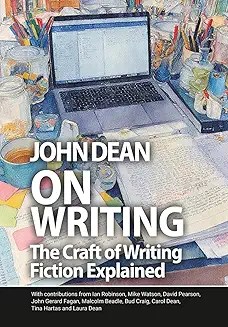
You don’t have to look far if you are an emerging writer for authors offering advice. I’m one of them with the free Handy Hints sections on this website and my recently-published book on fiction, entitled On Writing (available on Amazon).
And do you know what? Whoever you choose to learn from, it’ll be good stuff. Sure, different authors have different takes on their craft, different techniques, different philosophies, but, by and large, their advice will be good.
So, how do you select the right path? The answer is to be brave enough to reject some of the advice, however august the writer may be, and to select what works for you. You are not seeking to become a clone of a well-known author but to emerge as someone original with your own way of telling stories, your own approach to creating characters, your own way of describing locales, your own technique for weaving plots.
It will not happen immediately, it will need time to evolve, to experiment with what works and what does not, and an acceptance that you will not get it right every time.
The best piece of advice you can keep in mind is that, although writing is a very technical process, you should never lose sight of the fact that it should be fun so enjoy!
The valuable role of the delete button
I have been working on the latest DCI John Blizzard novel and am editing the final version before I submit it to the team at my publisher (The Book Folks, a Joffe Books company) for consideration for publication.
As I have mentioned in blogs before, but it’s worth mentioning again, even at this late stage an author still has to be prepared to be brutal with their words.
In my case, the words that tend to become victims of the delete button turn out, when I analyse it, to be the ones which were written to increase the word count.
Now, in the final edit, they must go because they’re unnecessary, usually excess dialogue or internal point-of-view passages that overdo it.
Does that mean I wasted my time writing them? Far from it, they were the words that triggered those many others that did survive.
When they are removed in that final edit, it’s like removing the bits of scaffolding that kept the building up when you were still engaged on construction but are now no longer needed.
Removing them tends to give the remaining chapters extra pace and a sharper focus and, for me, the words that don’t make the final cut are just as important as those that do.
The tried and trusted Page 95 Test
I am working on the latest DCI Jack Harris novel and will find myself with a working first draft in a matter of weeks.
My guide when assessing it will be the Page 95 Rule, hence turn to page 95 (always page 95, book after book, in the interests of consistency!) and read it top to bottom. If it’s an excellent page, you know you have produced a good draft, if it’s not very good… you know the rest!
It may sound simplistic but I have never known the Page 95 Test to fail.

A spot of self-indulgence – making use of light and dark
Those emerging authors who read my blogs containing handy hints about the craft of writing will know that one of my regular themes is discipline, the relentless pursuit of getting everything right in a manuscript.
That is as it should be, but there is also a strong argument for regular reminders that writing should be fun, hence the, perhaps unexpected, appearance of a classic Ferrari on my website.
The reason is that I have been working on the latest book in the DCI Jack Harris series of crime novels published by The Book Folks, a Joffe Books company (the next title in the DCI John Blizzard series is due to appear later in the year, same publisher) and, without giving too much away, one of the storylines involving Harris and his team of investigators deals with classic cars.
This has allowed me the opportunity to take a slight side-step away from the main plot and ask my son Michael (who has long since left childhood behind but who appears as toddler Mikey, the DCI’s s son, in the Blizzard novels) to recommend a high value car – he has always been interested in classic cars and knows his stuff.
And what a car he selected! Few modern supercars have achieved the cultural and historical significance of the Ferrari F40, which was introduced in 1987 to celebrate the 40th anniversary of Ferrari and was developed under the supervision of the legendary Enzo Ferrari himself.
Technically revolutionary, the most important F40s continue to command extraordinary prices within the collector market, with the six most expensive Ferrari F40s sold at RM Sotheby’s in 2025 going for more than $2 million each.
Not that all the wealth of background about the cars will featured in the DCI Harris novel but a couple of lines made it and prompted a nice scene as myself, as the author, was able to indulge in thinking about something lighter for a few moments before returning to the darker themes.
I was also able to offer the same opportunity to the reader – and post a picture of a Ferrari on my website, which always adds a touch of class.
More relaxed scenes are vital tools for the writing process, particularly in the work of those authors such as crime writers whose themes are mainly sinister.
Why? For a start, they can create light against the dark. Take an example: you are writing a sinister piece with the tension building as the tale unfolds. You might decide to keep the tension going right to the end, which would be one way of writing it and would certainly keep your reader with you. However, you might decide to be sneaky, concluding that a flash of humour, a single line of dialogue from a character, a light-hearted quip, could momentarily ease the tension, cause the reader to relax slightly and provide an even greater impact when you suddenly strike with the next piece of drama, or horror or fear, in the next line.
There is another good reason for using lighter passages containing humour in your writing, namely that it reveals things about your characters’ personalities. The use of humour can show another side to them that the reader might not have witnessed before or has seen before but not often so they appreciate it when it happens again. I know that my readers appreciate this because they often mention the light-hearted banter between characters in their Amazon reviews.
But what, I hear the authors among you say, if I can’t write humour? It is certainly the case that a straight-laced, humourless person might well struggle to write side-splitting comedy but if you are an author, that might not be a good enough excuse because, like it or not, humour is vital to creating good fiction. Even if you are not writing an out-and-out comic piece, humour has a vital role to perform.
We can’t all be Tom Sharpe but that should not stop us trying. It does not need to be side-splitting humour but that is not the intention of comedy in serious fiction: it has other roles to perform, as we have seen.
Another thing to remember is that humour is subjective. What is funny to one person may easily leave another cold. The best approach is to write in your own style, sticking with the language that pleases you. If it makes you smile, then there will be an audience out there who will plug right in to what you’re offering. Not everyone, but enough.
The rules behind the creation of fiction
If you find these hints useful, I have brought everything I know about the craft of fiction into a book called On Writing. Covering everything from creating plot and place to characters and tension, from how to beat writers’ block and how to translate the author’s personal experience into compelling fiction, from taking in an overview of the opportunities presented to emerging writers by the dramatic changes in the publishing industry and including my thoughts on approaching publishers and agents and preparing manuscripts for self-publishing, the book is available in ebook (99p) and paperback £5.00 formats on Amazon.
On Writing also has expert contributions from authors, publishers, editors and experts working with literary organisations and builds into a compendium of valuable advice for writers seeking their big breakthrough. You can also hire editing, mentoring and proofing services through me. Details are included in the Editorial Services page on the main menu.

