Including National Year of Reading
A time of opportunity for authors
AI – Friend or Foe?
Parents describe the barriers that are holding reading back
Research carried out as part of the National Year of Reading, in partnership with KPMG UK, has revealed that pressures on young families, as well as gaps in confidence and knowledge, are contributing to a sustained decline in parents’ engagement with activities known to support children’s early literacy development.
The research is part of an initiative by the National Literacy Trust, supported by a variety of organisations, to increase levels of reading.
A survey of 3,000 UK parents of children aged 0-5 revealed a six-year decline in parents chatting, playing and reading with their young children daily at home, with families living in disadvantaged communities most disproportionately affected.
The report found that in 2025:
- Fewer than half (45.9%) of parents said they read with their child daily, falling 9.1% since 2024 and 30.6% since 2019
- Just over half (51.6%) said they play with their child daily, dropping 8.6% in one year and 32.8% since 2019
- Chatting daily remained the most common home learning activity parents engage in with their child (70.2%) but rates still declined 10% in the past year alone and 22% since 2019
Parents who said they don’t engage in chatting, playing and reading with their child daily were more likely to be from disadvantaged backgrounds and report lower levels of confidence in taking part in the activities with their child and in understanding why the activities are important for supporting their child’s language development.
The reported barriers to parents engaging in daily activities to support their child’s literacy were:
- Lack of time, driven by working patterns (44.8%)
- The cost of activities (30.5%)
- The availability of local activities (21.7%),
- The cost of resources such as books (17.6%)
- Support from family, friends and local professionals (17.5%
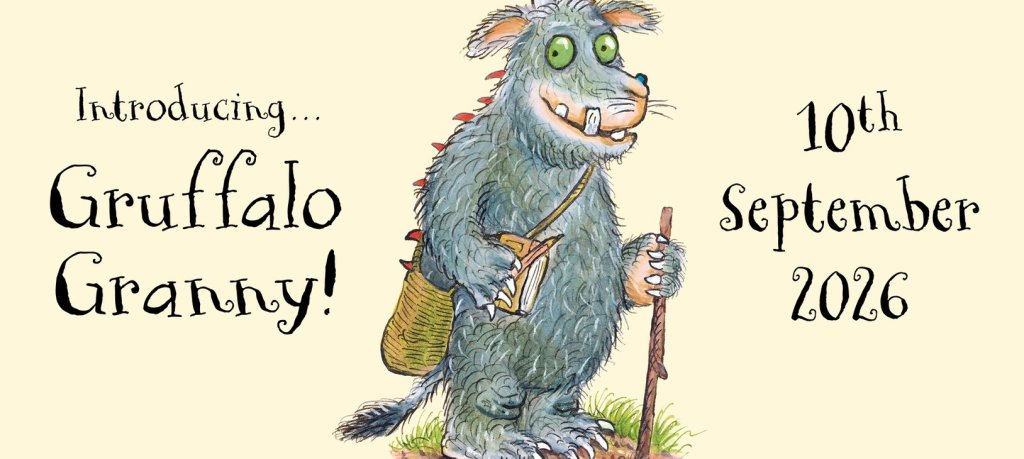
Among supporters of the year are author Julia Donaldson and illustrator Axel Scheffler, whose new Gruffalo picture book has been announced.
The story, due to be published on September 10th 2026 by Macmillan Children’s Books, will be titled Gruffalo Granny.
You can find out ways in which you can become involved in the National Year of Reading at https://literacytrust.org.uk/
January 13 2026
Authors support launch of National Year of Reading
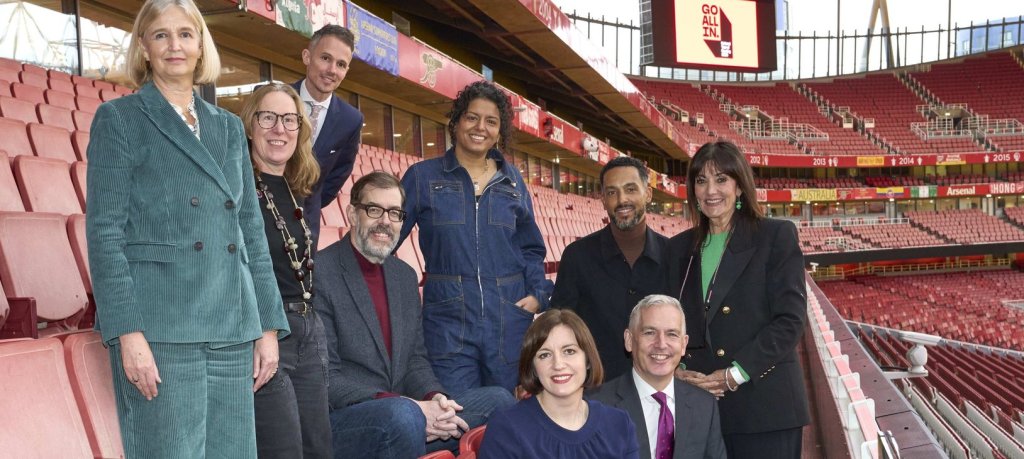
Authors and football personalities supported the official launch of the National Year of Reading at The Emirates, the home of London club Arsenal.
The nationwide initiative from the Department for Education and the National Literacy Trust seeks to address the steep decline in the nation’s enjoyment of reading by inspiring people of all ages to ‘Go All In’ on the things they already love through reading in whatever way works for them, whether that’s print books or audiobooks, digital magazines or graphic novels.
To launch the initiative, former Arsenal and England footballer Theo Walcott, author, producer and TV presenter Richard Osman and children’s authors and illustrators Nadia Shireen and Jordan Glover joined local primary schoolchildren in a series of activities to spotlight how passions such as football can ignite a love of reading and lead to exciting jobs.
Education Secretary Bridget Phillipson officially launched the campaign alongside Chief Executive, Jonathan Douglas, and National Year of Reading Director, David Hayman.
Bridget said: “Some of my happiest childhood memories are of reading with my grandad, getting lost in The Chronicles of Narnia together. I want every child to feel that same joy, whether their passion is football, fantasy or physics.”
Jonathan said: “The National Year of Reading provides us with a once-in-a-generation opportunity to reinvigorate the UK’s relationship with reading and change people’s life stories. Whether it’s a baby experiencing the magic of a picture book for the first time, a family listening to an audiobook on the school run, a teenager immersed in fan fiction or an adult reading the football pages on their commute, reading is for everyone.”
National Year of Reading ambassadors were also unveiled, committing to using their voices and platforms to help more children, young people and adults reconnect reading to their interests this year.
They include footballer and author Leah Williamson, authors Cressida Cowell, George the Poet, Michael Morpurgo, Julia Donaldson and Richard Osman, social media star Jack Edwards and fitness coach and author Joe Wicks.
Leah Williamson, Arsenal Women and England Lioness captain and children’s author, said: “The Go All In campaign is a massive moment for literacy in this country. Football is all about moments too. It’s all about chances. Waiting for them to arise and taking them when they do. The National Year of Reading 2026 is YOUR chance to really Go All In on your passions by reading into them. So, seize the moment and take that chance. Pick up a book, listen to an audiobook, get stuck into articles on whatever you love. It all counts. Because if you’re into it, read into it.”
You can find out more at https://literacytrust.org.uk/
Young school libraries help with preparations for National Year of Reading
Preparations are well under way for the beginning of the National Year of Reading 2026, which aims to tackle the steep decline in reading for enjoyment among readers of all ages.
The campaign is being run by the National Literacy Trust and the Department for Education under the rallying call Go All In, which was developed in collaboration with independent creative agency Fold7 to encourage people to adopt a new way of viewing reading.
Jonathan Douglas, Chief Executive of the National Literacy Trust, said: ‘Go All In captures exactly the kind of energy and optimism we need to transform how the nation sees reading. This is about making reading feel relevant, exciting and rewarding right now, not just in the future.’
The campaign builds on research that showed that the decline in reading and reading enjoyment is largely due to loss of motivation; just 9% of readers in a survey by the National Literacy Trust said that they believed that reading helps them spend time with others, and fewer than 1 in 5 said that it’helps them feel connected with the world.
Yelena Gaufman, Chief Strategy Officer at Fold7, said. ‘Reading doesn’t seem to offer the immediate, social rewards that motivate us today. It’s seen as slow, solitary, and studious in a world that values speed, status and spectacle. Historically, campaigns encouraging literacy have focused on the long-term benefits of reading – its ability to make you more knowledgeable, creative or successful. But these messages seem increasingly out of step with a culture that values immediate rewards and demands entertainment, right now.’
David Hayman, Director of the National Year of Reading, said: ‘Reading is one of the most powerful tools we have to connect, create and grow, but right now, too many people are switching off from it. We want to reimagine reading as something modern, meaningful and social. This campaign is about reaching people where they are and inviting them to rediscover the power - and joy - of reading.’
A large part of the campaign will be working with children and, as part of that, fifty pupils from 12 County Durham schools attended its first ever Pupil Librarian Conference at Durham’s Gala Theatre.
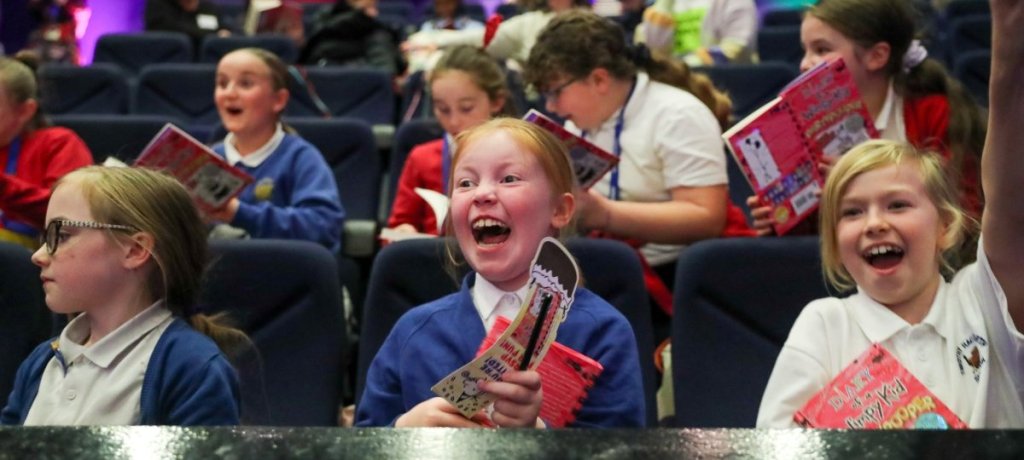
The schools had all taken part in the World of Stories – part of the Libraries for Primaries initiative – and the children were treated to a surprise visit from award-winning children’s author Jeff Kinney (pictured here), as part of his global tour promoting the 20th book in his popular Wimpy Kid series –Partypooper.
Each school that takes part in Libraries for Primaries is encouraged to appoint pupil librarians to support the running of their school library. Since the start of the Libraries for Primaries campaign in 2021, thousands of pupil librarians have been trained and are now championing reading.
Jeff Kinney appeared in person after tricking the children into believing he was joining via remote video link and the pupils and their teachers joined in a number of games in which they won hundreds of books and other prizes.
He said: ‘A school library is one of the first places a kid can really make their own choices. A kid can go in and pick out the thing that they like. You can make your own choices and a lot of the time, those choices that you make lead to interests, hobbies or even careers.’
Lucy Starbuck Braidley, Head of School Libraries at the National Literacy Trust, said:
‘Appointing pupil librarians in a primary school is a wonderful way to develop pupil’s leadership skills, literacy, and foster child-led community engagement in reading. When children are given opportunity to contribute to their library, it is often a transformative and empowering experience, creating a ripple effect in the school’s wider reading for pleasure culture.
Opportunities open up for authors in a dramatically changing world
As you can imagine, I keep a close eye on publishing trends and the beginning of a New Year is a good time to pull together some thoughts – and, as we enter 2026, they are thoughts that should offer hope for all those unpublished writers out there who are seeking that all-important breakthrough.
You will hear some writers, both published and non-published, coming up with gloomy prognostications about the book trade but I beg to differ. These are exciting times, boom times even, it’s just that with boom times come increased competition. Publishers have so much talent to choose from, it can sometimes feel dispiriting if you are awaiting your big breakthrough.
Understanding the dramatic changes in the publishing industry will help unpublished writers to increase their chances of success.
The truly remarkable transformation in recent years has been driven primarily by technological innovation that is changing customer behaviour and global sales trends.
The traditional model, where print books were the primary focus for publishers and the emerging idea of digital ebooks were given a lower priority, has been turned on its head in many sectors with publishers selling many more digital books than hardcopies.
The opportunities that technology has presented has seen many small publishers created and small ones rapidly becoming much larger, and more and more influential with their fleet-of-foot approach to bringing new authors to market, as well as many more writers able to self-publish their work in an increasingly professional manner.
This has been made possible by the opportunities offered by retail websites like Amazon. Whatever you think about Amazon, they do sell books and open up opportunities. In addition to the sale of books, subscription services like Kindle Unlimited, where readers pay page by page, have gained substantial market share.
Also, print-on-demand technology has revolutionised the economics of physical book production because, by removing the need for large print runs and storage space in a warehouse, printing books is economically viable even for niche titles with limited audiences.
Another result of technological developments is that publishing has become increasingly global with the removal of the traditional barriers to international distribution, allowing publishers access to international markets.
Adding to the changes are the fact that smartphones have become a primary reading device for millions of consumers worldwide.
Finally, audiobooks, once a niche format primarily serving the visually-impaired and commuters, have hit the mainstream in a big way, growing at double-digit rates annually for several years. Some companies are offering technical services at such competitive prices that small publishers and authors who self-publish can now produce their own audiobook versions of their titles.
It is also worth remembering that books are still sold in huge numbers by big-name high street stores, and independent bookstores, the latter having experienced a resurgence, with their numbers growing steadily over the past decade, relying on the expertise of their owners/staff, the highly personal service they offer and their position at the heart of their communities. In the age of the digital book and the likes of Amazon, small, independent bookshops like my local one, Gallovidia in Kirkcudbright in Dumfries and Galloway, need, and deserve, our support.
The move towards digital, and away from print, has been particularly popular in genres such as romance, science fiction and crime fiction, where digital readership is particularly strong but so, too, is the hardcopy tradition with sales remaining robust, despite the competition from digital.
Just as technology is changing publishing, so are readers’ tastes, as ever, and a number of organisations take the New Year as an opportunity to assess where the industry is going in the next twelve months (definitely worth checking out their websites for the full story).
Such studies point to dramatic changes in content as well as technology. Take Bookshelf at www.bookshelf.com. Its recent prediction for ‘What’s going to be hot in 2026’ include the prediction that romance, which has been the bestselling category in publishing for years, will stay on top in 2026 but that readers are increasingly seeking out genres that blend romance with other popular elements, such as Romantasy (a mixture of romance and fantasy). Bookshelf predicts growth in mixtures of sports romance, dark romance, and sci-fi romance, because they are new and fresh.
Bookshelf also predicts continued growth in cozy fantasy, continuing a trend which started in the early 2020s and which features heartwarming adventures containing little jeopardy. Bookshelf predicts a growth in cozy sci-fi—gentle, character-driven stories set in futuristic or spacefaring worlds. Readers want comfort and escapism, and this demand won’t fade any time soon, its team say. Readers, they say, are also looking for cozy mysteries, cozy romances, and even cozy horror.
Bookshelf predicts an increase in books recalling the pop culture of the late 1990s/2000s, which, it says, will resonate with millennial readers looking for comfort in familiar settings.
One startling prediction is that the clock will go back to the time of Charles Dickens as digital platforms breathe new life into the format of serialised storytelling. Stories used to be serialised in printed magazines but now the concept is moving onto digital platforms.
Also, says Bookself, more and more readers are investing in special editions, versions of hardcopy books with maps and the like.
Another major force shaping 2026 will be the rise of translated fiction. Korean fantasy, Chinese romance, and Latin American speculative fiction are already increasing their reach and Bookshelf says that streaming platforms have proven that audiences are hungry for global stories (it works both ways, with books written in English being translated).
Among other organisations making their predictions have been Book Browse (www.bookbrowse.com), whose predictions for 2006 include audiobooks continuing to trend upwards. The Audio Publishers Association reports that as of 2025 more than half of Americans eighteen and older have listened to an audiobook, and interest rose by 6% from 2024, driven by the fact that it’s a convenient way of consuming stories. The pictures is similar elsewhere, including the UK.
Bookbrowse agrees that deluxe special editions will continue their upward trend. Once mainly reserved for classics, fantasy, and Young Adult (YA) books, it says that deluxe editions have become more common in the genres of historical fiction and contemporary literature for adults. This is happening, says Bookbrowse because readers who read digital formats want something special in the physical books they own.
Publishing State (https://publishingstate.com) says in its predictions that readers are consuming more content than ever, and the global book market, including print and digital, remains robust, with projections suggesting its total revenue will comfortably exceed prior-year figures.
It says that technical advances in editorial, design, and production processes allows publishers to capitalise on topical non-fiction or rapidly produce backlist titles in new formats, such as audiobooks.
Publishing State says: “If print is the anchor and e-books the sturdy sail, audio is the wind driving the industry forward. Building from the 2025 trend, the global audiobooks market is experiencing rapid growth, with a projected value between $13 billion and $18 billion by 2026, driven largely by the convenience of listening during multitasking activities such as commuting, exercising, or household tasks. This growth is forcing publishers to view audio not as a subsidiary right, but as a primary format, often developed simultaneously with the print and e-book editions.”
Publishing State says that the next frontier for digital publishing involves merging text through the likes of augmented reality (AR) and virtual reality (VR) technologies.
It says: “Imagine a medical textbook where a reader can scan a diagram with their phone and instantly see a 3D, manipulable organ model hovering above the page, or a historical fiction novel where AR overlays bring a medieval city to life through your tablet screen. This ‘immersive content’ market is growing exponentially, demonstrating a consumer willingness to pay for enriched experiences.”
For all those readers, like me, who fear for the future of printed book in a digital world, Publishing State has words of reassurance: “For all the digital disruption, the print book remains remarkably resilient, maintaining a majority share of the consumer book market. However, its continued success in 2026 hinges on a dual reinvention: aesthetic appeal and environmental sustainability. Print is becoming a luxury or collectible item, moving away from being a mere vessel for text. This involves a focus on high-quality production, unique cover treatments, special editions, and beautiful binding that digital cannot replicate. People want print books to own, to display, and to gift.”
It adds: Crucially, the publishing industry is finally getting serious about its environmental footprint. Consumers, especially younger readers, are increasingly factoring sustainability into their purchasing decisions. This is driving a trend toward Print-on-Demand technology for smaller runs to minimise waste and a broader adoption of recycled, certified paper stocks. Publishers who can credibly demonstrate a commitment to carbon-neutral production, transparent supply chains, and reduced obsolescence will gain a significant reputational advantage in a marketplace that demands corporate responsibility.”
AI Friend or Foe?
May 1 2026
Author beware
Like many authors, I receive all sorts of emails on a daily basis, most of them selling services such as promotion of my books, perfectly genuine but basically sales pitches.
Others are obviously scams, some patently obvious as they demand money from the outset, but some are more subtle.
I can usually spot them but sometimes they can blindside me (as a journalist, I wrote on the topic of Internet security for years, warning people about the danger signs but even I sometimes get caught out).
That happened this week when I was emailed by what appeared to be a best-selling children’s author (a big, big name). This interested me because, in addition to my crime fiction, I would love to have my children’s books published and the ‘author’ asked for nothing, no money, had nothing to sell, just wanted a chat author-to-author. His/her/it – if you can call AI a his/her/it -reason for emailing is that he (etc) liked my recently-published guide to writing fiction.
I still could not see the scam so I tried putting his name and the word ‘scam’ into Google (oh, yes, folks, don’t tell me that I did not learn some sophisticated investigative techniques during my years writing on Internet security – my creations DCI John Blizzard and Jack Harris would be proud of me!) and there they were, pages of authors’ warnings which said the author’s name had been hijacked by scammers.
So what do we do as authors? The email was very complimentary and I was flattered (and I like to think I am immune to false flattery but it is, I am afraid, warning sign number 1). Is abuse of the web turning us all into suspicious creatures? I am afraid that the answer is, to extent, yes. But that is how it must be. It’s a bleak message, I know, but authors have to proceed with extreme caution. Sad but true.
April 24, 2026
Celebrating the human touch
Here’s a brilliant idea. Faced with growing concern that Artificial Intelligence (AI) is drawing on writers’ work without acknowledgement, copyright permission or paying for it, the Society of Authors (SoA) has come up with a kite mark which identifies a piece of work as created by a human being.
The Human Authored scheme helps identify works written by humans in a market increasingly flooded by AI-generated books and is the first of its kind launched by a UK trade association to help protect an entire profession.
According to the SoA, the move comes in the absence of any measure by the Government to compel tech companies to label AI-generated outputs, which has left readers struggling to distinguish between books written by a human, and machine-generated work based on AI models that have been trained on copyrighted work without permission or payment, says the Society.
The Society of Authors’ scheme allows authors to register their books and download a ‘Human Authored’ logo to display on the back cover.
Children’s author and SoA Fellow Malorie Blackman OBE, one of the writers backing the scheme, said: “The ‘Human Authored’ scheme seeks to highlight the imagination, commitment, craft and care taken to produce stories and books which can be enjoyed by everyone.
“Any creative endeavour requires time, effort, a willingness to learn from mistakes and failure, and a determination to persevere – lifelong, essential skills which cannot be learned and honed by allowing AI to do all of our creative thinking and production for us.
“Surely part of the pleasure of reading, listening to songs, watching films and dramas, looking at an artwork and in fact, sharing any creative endeavour is that sense of connection with the content creator, that feeling that they are speaking to you on some deep, emotional level that is 0entirely absent when the work has been produced by AI.”
Anna Ganley, Chief Executive of the Society of Authors, said: “Since generative AI platforms have become mainstream, the SoA has been campaigning to defend authors’ interests and safeguard creators against the wholescale theft of their work by AI tech companies to train their AI chatbots. Our new labelling scheme is an important sticking plaster to protect and promote human creativity in lieu of AI labelled content in the marketplace.
“In a recent survey, 82% of our author members told us they would be interested in a ‘Human Authored’ certification scheme. And while we believe the onus should be on tech companies and online retailers to label AI-generated content, until that happens, we have listened to our members and we’re providing a means for them to identify their work as being created with their uniquely human skill, hard work and originality.”
Initially, the scheme will be open to SoA members only, free of charge. The longer-term aim is to open this scheme to non-members.
You can find out more about the society’s work at https://societyofauthors.org/
March 19, 2026
A hard-won success
The Society of Authors (SoA) has welcomed news that the Government is moving away from a proposed copyright exception for AI training, a move which will protect authors’ rights. For what it’s worth, so do I.
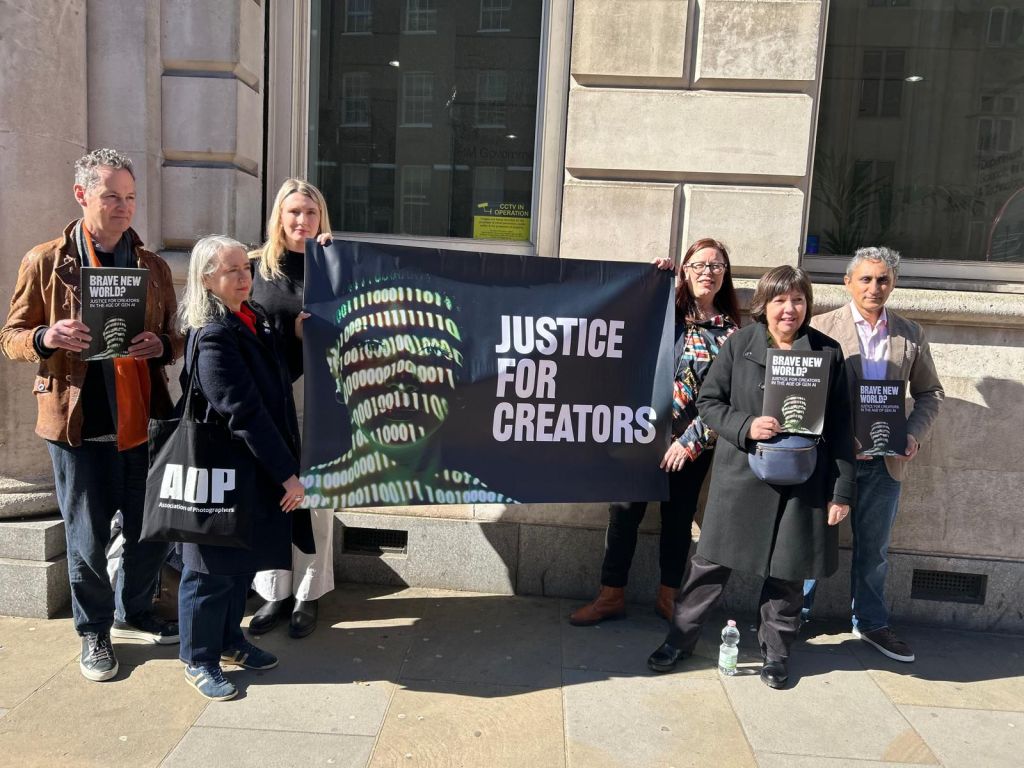
The SoA is one of the organisations that is concerned about the use of pirated books to train AI models and has held several protests. SoA officials were worried that the Ministerial Statement and Report on Copyright and Artificial Intelligence would allow such work to be exempted from copyright.
The SoA, which joined other creative organisations to protest, including outside the offices of the Department for Science, Innovation and Technology, welcomed the Government announcement that “in light of the strong views from the consultation, the gaps in evidence and the rapidly evolving AI sector and international context, a broad copyright exception with opt-out is no longer the Government’s preferred way forward”.
The SoA says that the announcement is welcome but does not mark an end to the campaign because there are still huge levels of uncertainty that threaten livelihoods when authors’ copyright-protected work continues to be used without permission.
SoA Chief Executive, Anna Ganley said: “This is a hard-won moment for authors and creators, as changes to copyright that would have weakened protections are finally laid to rest. We welcome the Government’s reassurance that the option of a TDM (text and data mining) exception and opt-out published back in 2024 are now officially off the table.
“The commitment to a four-strand work programme looking at Digital Replicas, AI Labelling, Creator Control and Transparency, and a working group for Independent Creatives all have the potential to support policies the SoA have been campaigning for to strengthen protection and control.
“However, these wins have been a long time coming. We petitioned the Government a year ago asking for justice for authors. The pace of progress needs to match the excessive speed at which AI is developing and encroaching on creative industries. Each day that the uncertainly continues is a risk to author incomes. Failure to act without further delay will unquestionably have a catastrophic and irreversible impact on all UK authors.”
March 6 2026
Authors back call for more control of AI
The Society of Authors (SoA) has backed a Parliamentary report that calls for greater control of Artificial Intelligence (AI) to protect writers.
(SoA) officials have welcomed thirty eight recommendations made by the House of Lords Communications and Digital Committee, which include a call for the Government to make a clear public statement that commercial AI developers operating in the UK must obtain appropriate licences when using copyright-protected works, something that the SoA have long campaigned for.
The report also calls for stronger transparency requirements, statutory duties for major AI developers, and regulations that support rights-holders..
Baroness Keeley, Chair of the Communications and Digital Committee, said: “Our creative industries face a clear and present danger from uncredited and unremunerated use of copyrighted material to train AI models. Photographers, musicians, authors and publishers are seeing their work fed into AI models which then produce imitations that take employment and earning opportunities from the original creators.
“AI may contribute to our future economic growth, but the UK creative industries create jobs and economic value now. In 2023 the creative industries delivered £124 billion of economic value to the UK and this is set to grow to £141 billion by 2030. Watering down the protections in our existing copyright regime to lure the biggest US tech companies is a race to the bottom that does not serve UK interests. We should not sacrifice our creative industries for AI jam tomorrow.
Anna Ganley, who gave evidence to the Committee in November on behalf of the SoA, said: “We wholeheartedly agree with the Committee’s recommendations. It is a thorough examination of the issues informed by evidence from across the tech and creative sectors. Authors and creators cannot accept the current standstill from Government while their livelihoods disappear. Authors want fairness, transparency and licensing. Hesitancy from Government on this continues to leave the gate wide open for unscrupulous theft of authors copyright-protected work for AI training.”
February 8 2026
Report spells out dangers of AI
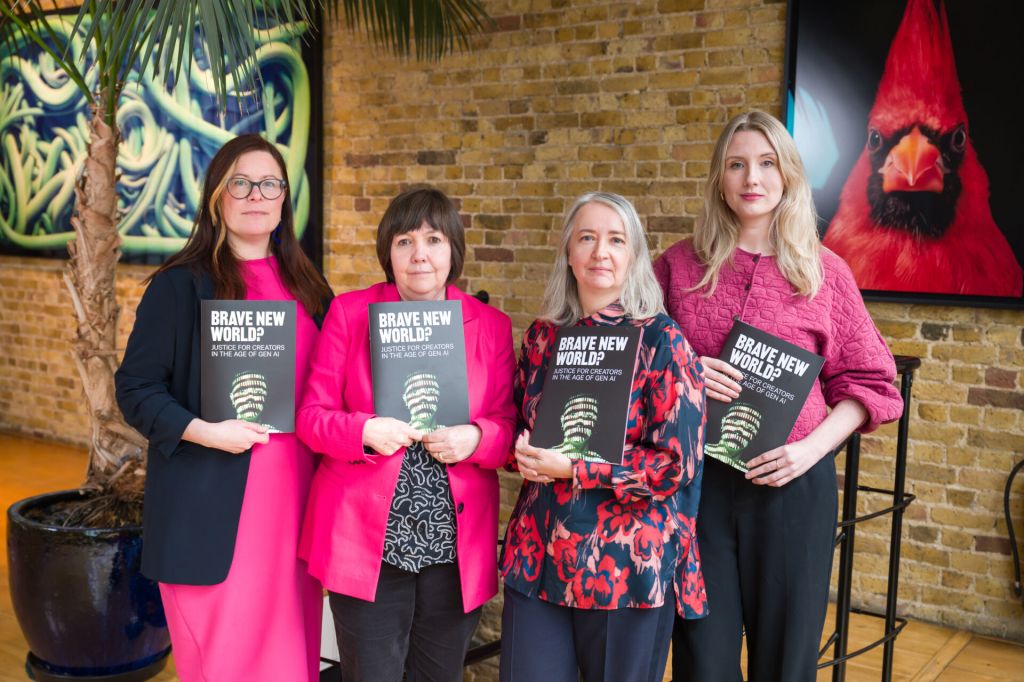
Launching the report: L to R: Anna Ganley, CEO of SoA; Deborah Annetts, CEO of ISM; Isabelle Doran, CEO of AOP and Rachel Hill, CEO of AO
The Society of Authors is among the creative sector organisations that have launched a report showing the potentially devasting impact on the sector of Artificial Intelligence (AI).
AI has been heralded as the next industrial revolution, promising an age of innovation, limitless productivity and economic growth, but the reports says that such change comes at a cost of the industrial-scale theft of the UK’s cultural riches.
Entitled Brave New World?, the report calls for the Government to a new regulatory framework to protect the livelihoods of authors, illustrators, musicians, performers, and photographers, or risk the devastation of the UK’s £124.6 billion creative industries sector.
The report uses evidence from more than 10,000 creators and is published by the Society of Authors (SoA), the Independent Society of Musicians (ISM), Equity, the Association of Illustrators (AOI), and the Association of Photographers (AOP).
Key findings include:
- 99% of creators say their work has been used without consent
- One in three creative jobs have already been lost to AI
- A third 32% of illustrators report lost commissions or cancelled projects due to AI
Authors are also hard hit:
- 86%of authors say that AI has already reduced their earnings
- 72% of authors say job opportunities have already been cut
- 57%of authors say their career is no longer sustainable
- 43% of literary translators and 37% of SoA illustrators saw earnings fall due to AI
- 26%of illustrators and 36%of literary translators report cancelled or redirected commissions.
The trade associations behind the report says the Government should set a global standard for ethical, human-centred AI deployment, with the implementation of a new regulatory framework that:
Clarifies the Copyright, Designs and Patents Act 1988(CDPA) to ensure creators’ works cannot be used to train AI models without explicit, prior consent
Supports statutory licensing scheme AI training that provides a lawful, transparent route for AI developers to access creative works, ensuring fair payment and attribution to creators
Ensures ethical use of training data creates enforceable ethical standards for the sourcing, curating and application of training data
Ensures accountability: about which copyright-protected works have been used, how they were obtained and whether they influenced outputs.
Says that Remuneration and Rights work should be attributed and paid for.
Why it’s time to take a stand against AI
I feel that it is time to address a subject which I have avoided for far too long and yet is, by far, the most important challenge that today’s writers face. I am talking about running out of teabags. No, seriously, I am referring to AI, of course. Let me be clear right from the beginning -Artificial Intelligence may be brilliant technology but I am extremely wary of the damage it can do (also, if you chuckled at my teabag quip, remember that it is highly unlikely that AI would ‘think’ to introduce it into the piece).
I have several reasons for disliking AI. One is that, having worked as a freelance journalist for twenty one years before becoming a full-time writer, I often picked up jobs to produce factual sections for magazines, books and websites. It is not too dramatic to say that I believe AI represents a potentially fatal blow to the world of freelance and in-house journalists because it will be seen as a better, and more importantly, cheaper way of doing such work.
I can see the argument used in other business sectors that computers can do the ‘boring’ stuff, leaving the more creative work to human beings but we all know that in too many cases it does not work like that. An editor faced with a journalist who says that producing a feature will take a couple of days when they include the writing and researching, will inevitably be tempted by the idea of asking AI to do it and it arriving in twenty minutes – and for a fraction of the cost charged by the pesky human, who has just rung to say that the article will not be with them until tomorrow because the dog has to go to the vet.
I would make one exception; I can see the benefit in AI ploughing through medical research that would take a team of humans years to analyse, particularly if it is work so vast that it would not be done otherwise and the outcome dramatically shortens the wait for new treatments.
However, that is my only exception and I believe that humans should still be used for the vast majority of work. That does not just relate to journalists, it also covers book editors, proofreaders, designers, public relations people, marketing specialists, publishers, literary agents etc. These are highly skilled people who bring a unique human judgement to the task. I hate the idea of them being replaced by AI.
Then there is the quality of AI’s writing. Like many authors, I have had features written about me with the journalist bringing their powers of observation and judgement into play to produce something unique. I may not always like the result but as long as it is factual, I can’t really object. That’s the value of getting a human to write the piece.
However, there are also profiles of me online that I assume were written by AI – I say ‘assume’ because no one interviewed me or told me that the profile was being done. I am guessing they were written by AI because they are 90% accurate (there is the odd factual error but that could be said of humans, of course) but the final piece lacks the creativity that a human would bring. It is bland and lacking something – I am thinking of one piece in particular that would be hugely flattering were it not spewed out by rote. AI does not bring that crucial judgement to the task that a human does.
And so finally we come to authors. AI, if asked to produce a novel/non-fiction book/collection of short stories/play/screenplay, can come up with something perfectly serviceable but it will be lacking the individual touch that the author brings to the job. If you take the genre in which I work, crime fiction, that could mean that the end result is lacking the inspired twist, unique motive, deep, dark secret, brilliant Red Herring that humans bring to the job and which make reading (and writing) crime fiction such a joy.
I am extremely wary of those who advocate a greater role in the process for AI, editing/ checking grammar etc (and I have heard it from some authors). We have to take a stance and take it now. I know that in many ways it is too late – that the genie cannot be shoved back into the bottle but, as an industry, we must guard against the dangers at all times, otherwise we run the risk of losing something special as authors and associated crafts become an endangered species.
And, finally, an author’s cautionary tale about Artificial Intelligence
I am at the age when dementia becomes a consideration – my father died with it, as you may have read in this book – so I became somewhat concerned over developments on my laptop over several weeks recently. I would return to the previous day’s writing on my laptop for a quick refresh before moving on, only to find that occasional sentence that I did not recognise, or remember writing, had appeared in the text. They were not written in my style and sometimes used words that I do not.
Finally., I had my answer and, thankfully, it is not dementia, although the alternative, which I had suspected for a while, does not put the mind at rest. My laptop, like so many of the new designs, has an inbuilt AI system, there whether I like it or not (for the avoidance of doubt, Not). The programme keeps pestering me to help with the editing or write new passages (it even asked if it could cook my dinner!) but I either say ‘no’ or ignore it and it goes away until its next attempt. One writer I know became so angry, she typed a four-letter word and the AI programme admonished her for being rude.
Anyway, back to the story. One of the word files I have on my desktop is a kind of dumping ground – it contains regularly used phone numbers, the occasional line from my in-progress novels which I do not need but may do so eventually, vague plot ideas, names yet to be allocated to fictional characters etc etc.
I must have inadvertently clipped the AI symbol while working on my latest novel recently because the programme produced half a page of text using what was already there in my dumping ground, starring my fictional names, weaving in the spare sentences and dropping in the numbers, all worked into the rudimentary semblance of plot. It’s not particularly good but that’s not the point –I am the writer, and what’s more, it could be risky – what if next time (the icon is hovering next to this word document, as I write this and I can’t get rid of it) without me noticing, it drops its text on a page that I think is finished and do not intend to return to? What if the next person to read it is the publisher/agent?
There is one good thing to come out of this little episode, it’s given me a great idea for a novel!

