
July 8 2026
A question of secrets
Here’s another Handy Hint for emerging writers. You need to keep something from the reader if you are writing a crime novel, preferably something big which when revealed has them understanding the clues you dropped earlier in the story and amazed that they did not pick up on them.
Like what, I hear you ask? Well, I have used everything from crimes we did not know had happened to red herrings which hide a family secret (Agatha Christie was particularly adept at this). I have also used secrets involving revenge, theft (money, money, money!) involvement in organised crime, protection of friends and family, eradicating those who would seek to reveal the truth about a character, and, of course, that reliable standby, love.
Revealing your story gives your story huge momentum and every story benefits from that.
The key thing for the author when they begin to reveal their secrets is to ensure that they strike the reader as credible, that they are something which could plausibly lead a person to commit a serious crime. Done right, it gives your writing power which will have writing turning those pages.
June 26 2026
Time for another murder?
There’s a half-serious/half-jokey crime writers’ adage that, if your novel starts to lose momentum, it’s time to murder another victim. Of course, it’s not that simple, although a murder would certainly do the job in the right place. I mention it because I have just dropped a murder into my latest novel and it has given the plot plenty of directions in which to go, which it badly needed as it was in danger of slowing down.
What lies behind the adage is one of the most important elements of crime writing, namely the need to constantly inject energy into a story and it does not come just from big drama-filled moments.
So, what could you, as an author use? The following are some examples:
- A revelation, a piece of information that opens up a new avenue in the plot
- Well-written dialogue – characters speaking is an excellent way of injecting energy, including a good old-fashioned argument or a passage based on humorous banter
- Backstory – something from a characters’ past can inject new energy into the story’s present
- A brilliant flash of description which brings a character’s surroundings to life
- Dramatic weather/atmospheric conditions, everything from torrential rain and swirling snow to the first light of dawn
- A spooky experience such as a mysterious figure glimpsed in the shadows
- A noise in the middle of the night, such as the trying of a door handle, the ringing of a telephone, the scraping sound of a shoe
- A line that hints at events happening elsewhere that, although unseen, will have a dramatic effect on the main character.
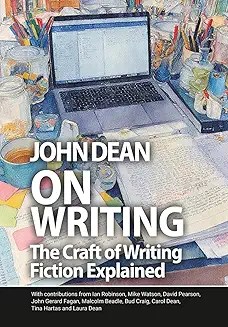
I have dropped this here on my free Handy Hints – Plotting page but if you want to explore the subject in more depth, you could always purchase my recently-published book which examines the craft behind fiction, has been published. On Writing is available on Amazon in ebook and paperback format.
May 13 2026
Be yourself
I’ve been blogging quite a bit recently about the process right at the beginning of writing. Indeed, before writing. The emerging author faces some key decisions, not least what do they do after learning their market place?
As I have said before, I think it’s important that they understand the kind of things being published but that does not mean, I would suggest, that if you are one such writer, you deliberately mimick the most successful authors.
OK, if your writing ends up reading like one of the big names, then so be it but only if it’s the way you write anyway, that it is your natural style. If you are that talented, take advantage of it, but I suspect that publishers and agents recognise the difference between an author who is genuinely talented and those who are simply copying successful writers.
The naturally talented ones have a feel of authenticity about so here’s my free gratis Handy Hint on the subject. Definitely read the best writers, and learn from them, but when you come to write, be yourself. If nothing else, you will feel more comfortable over the many hours you are going to invest in writing your novel.
May 12 2026
How advice from a master can help keep the author in track
Because I am starting work on a new novel, my mind is in ‘creative mode’. I have said before that I like editing more than I enjoy being creative, which is true, but that’s not to say that I don’t enjoy creativity.
The key is a strong idea right from the start, one that can produce shoots, rather like a plant. Good storylines have one idea that is the main driving force, but the author (certainly a crime writer) should think that one idea on its own is not enough.
You need sub-plots, one of which could, for example. be centred on something from the personal life of one of the secondary characters, stepping to the front of the stage, as it were, or a new character making his/her debut and bringing with them a plotline, or maybe a strand of plot (for example, the main story may deal with a murder but a sub-plot could be about a series of burglaries which either turn out to be an integral part of the plot or a completely irrelevant Red Herring).
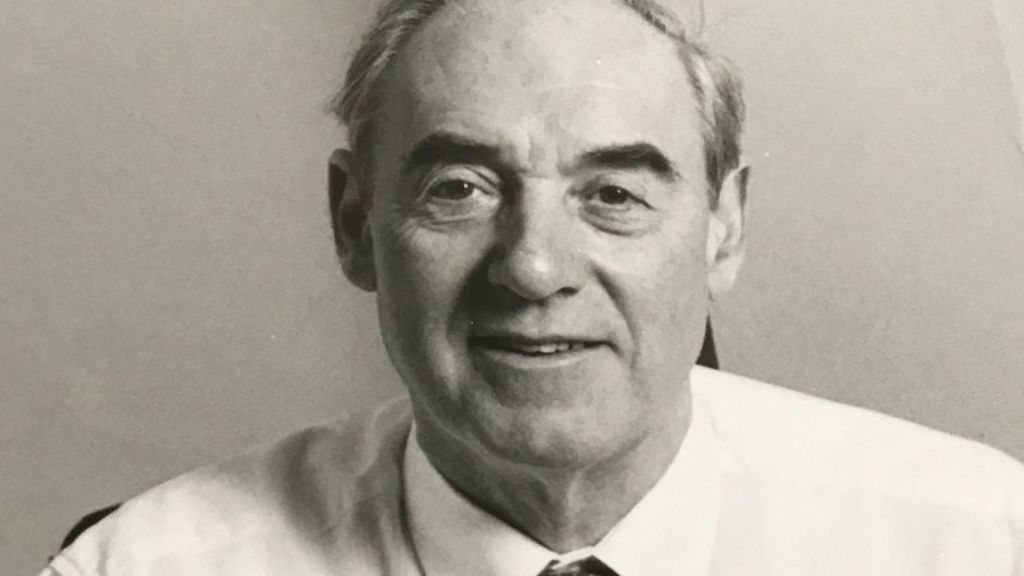
Whatever your sub-plot, there is a crucial rule here. Sub-plots can give the reader a break from the main plot, which can be energising for them, but ensuring that the author/reader does not stray too far from the main storyline is vital because otherwise you lose focus. ‘Never lose your sense of the main story’ was an excellent piece of advice given to me by one of my first editors, the legendary John Hale of London publisher Robert Hale (pictured here).
May 8 2026
Keeping it fresh
If you are an author who, like me, writes long-running series of novels, your big challenge is balancing the needs of readers who are familiar with the stories with those who are new to the landscape in which they are set and the characters who make them happen.
So, as I sit down to write the new DCI John Blizzard book (I work about a year ahead), what am I thinking?. The first thing is that I need a strong story. That does not change whether it is the latest in a series, the first one or a standalone.
Personally, I like writing series, but I acknowledge that the book cannot simply be ‘another one’, it needs to develop the characters’ lives and their roles within the story and to have new characters as well and to be written as if it’s the first in the series.
Taking that approach will energise the author and an energised author can achieve great things.
May 6, 2026

Here’s a Handy Hint for if you run into writer’s block. Try doing something completely different to clear your mind.
Personally, I use gardening. At first, I thought it would make me think of nothing and so create space for thoughts of writing when I was doing the various jobs, weeding and the like. However, to my surprise, it actually it made me think of er… gardening.
Result – a reset of the mind which allowed the ideas to flow when I had finished my gardening, a bit later. There are other free Handy Hints in the pages accessed off the menu on the home page.

Energy is crucial to the success of storytelling. In this piece, best-selling crime writer John Dean offers some thought on how he, and other, authors inject much-needed energy into their stories
There’s an old half-serious/half-jokey crime writers’ adage that, if your novel starts to lose momentum, it’s time to murder another victim.
Of course, it’s not that simple, although a murder would certainly do the job but not if you overdo it and the landscape is littered with them. A murder is a powerful crime writers’ tool but it is easy to overdo it.
What lies behind the adage is one of the most important elements of crime writing, indeed all writing, namely to constantly inject energy into the story – and that does not come just from big drama-filled moments
So how do you achieve it if you are an author? Well, energy does not need to be dramatic, as this list shows. Yes, an incident such as a murder/crime/police raid will do the job but so will:
A revelation, a piece of information that opens up a new avenue in the plot
Well-written dialogue – characters speaking is an excellent way of injecting energy, including a good old-fashioned argument and humorous banter
Back story – something from a characters’ past can inject new energy into the story’s present
A brilliant flash of description which brings a character’s surroundings to life
Dramatic weather/atmospheric conditions, everything from torrential rain and swirling snow to the first light and dawn
A spooky experience such as a mysterious figure glimpsed in the shadows
A noise in the middle of the night, such as the trying of a door handle, the ringing of a telephone, the scraping sound of a shoe
A line that hints at events happening elsewhere that, although unseen, will have a dramatic effect on the main character, eg a scene that switches between characters doing something mundane and the approach of the person who intends to kill them -and back again.

