September 22, 2026
The changing world of description
I am sensing an interesting, and hugely encouraging, change in the way many publishers react to their readers when it comes to the way description of place is used.
Sense of Place is important to me, as a writer, because it inspires many of my ideas and also gives readers a strong sense of being there, as happens in the work of crime writer David Pearson, whose latest novel I will be reviewing when it is published in the next few days (I’ll put it in my Review section as well as on Amazon).
As David, author of the hugely popular Galway Homicide series, published by Joffe Books, wrote in his contribution to my book on the craft of fiction, On Writing.: ‘By treating the landscape and other details about the area as an important character in the books, I hope to get the reader really involved in the story to the extent that they can imagine actually being there, and living some of the experiences of the protagonists and even the victims.’
Sense of place has had to work hard for its place on the page in recent times with some publishers concerned that the modern reader does not want much description in their novels.
However, publishers such as Joffe, who also publish my work, have sensed that readers like description, either of places they do not know or do know or are familiar with and wish to be reminded about.
So what is driving this change in thinking? Well, it’s the factor that drives all publishers – book sales. If readers are saying they want more description, and many are, then that’s what they shall have.
There are two ways of approaching the subject if you are an author. As shown by the trend outlined above, one argument contends, and with much merit in my view, that description handled well by a skilled wordsmith has a place in modern novels and that longer passages of description can still make for compelling reading. To see what I mean, check out the novels by Scottish crime writer Peter May, whose richly evocative descriptions of the Highlands and Islands show a true master at work. Away from crime fiction. it is worth reading the books by Laurie Lee, best known for his 1959 title Cider with Rosie and As I Walked out one Midsummer Morning, which came out a decade later, and I defy anyone to read the opening pages of Charles Dickens’ 19th Century novel Great Expectations and argue that extended description has no place in literature. They are all among the finest passages of description in the English language, were when they were written and will stand the test of time in the years to come.
The second school of thought – which, also has much to recommend it, and they can complement each other – is that description of places should be short and sharp, not overdone, because the modern reader is already bombarded with imagery on their computers and smart phone.
Those who argue that shorter is better say that too much description can slow a story’s pace and deter the reader. However, you still need to provide some clues so if you are an emerging writer learning your craft identify what you think are the most important things are about a place and describe them. Even if you do it sparingly, the reader’s imagination will build up the full picture because good writing is about triggering a response in the reader, often bringing out memories of places they have visited.
Among the people championing the re-emergence of Place is the team behind the Trip Fiction website (www.tripfiction.com), which helps readers to search for books by location and not author when they are arranging holidays and short breaks around the location of literary works, both in the UK and abroad.
Also writing in my book On Writing, Tina Hartas, one of the Trip Fiction team, said: ‘Literary Tourism is certainly gaining traction. People are searching for new and different angles when it comes to planning trips, and exploring a location through literature is proving increasingly seductive. Immersion into place through literature is a wonderful way to gain greater understanding. Picking up a novel before a trip makes for great anticipatory preparation (a reader might even find some top tips for their visit). Reading whilst in the chosen location adds a sensory element, a 3-D experience, and then, upon return, a book can help reconnect with personal memories. Reading literature with a strong sense of place is a great way to ‘travel’.’
June 30 2026
A lesson re-learned
Writing is all about learning, and re-learning, lessons, however experienced the author is, and yesterday’s lesson was the importance of listening to your characters.
I knew what I wanted to achieve with the scene I had just started to write – it was part of the synopsis – but I needed a way of making it happen and was struggling, so I put my characters, the detectives John Blizzard and David Colley, in a bar with a beer in their hand and let them talk.
The result was the emergence of new themes and the revisiting of old ones. It really did feel like the guys did all the work and I just did the typing – and that’s the sign that your writing is working and working well.
June 18, 2026
How resolving standalone quandary presents authors with opportunities
Authors who are writing series of novels, like myself, face all sorts of challenges but particularly how do you accommodate new readers while making sure that you do not slow down your storytelling by dumping the same information on readers who have followed your stories from the beginning and don’t require telling again?
The answer is to regard each book as a standalone, as if it is the only book of yours that they will read. However, inevitably there will be developments that spill over from one book to the next and that can create excellent opportunities for the writer, as I have discovered on starting to work on another DCI John Blizzard novel (the next one comes out in September 2026, this is the one after that).
Without giving anything away, the book due out in September sees a number of regular police officer characters promoted (they had been the same rank, and done the same jobs, for 12 novels, so they deserved promotion. Indeed, it felt false that they hadn’t been moved up a rank.
Those readers who have become series fans will appreciate the often-subtle impact of the kind of changes outlined above and as author I found that the storyline featuring the promoted David Colley has had a particularly profound effect. New responsibilities which came with his promotion allowed his character to develop, he has a more proactive role in investigations and his stature has grown. I hadn’t planned any of that, it just happened naturally as I started to write the new-look character. I just did the typing!
However, none of this is obvious to the reader coming to the series for the first time and the aim for publishers is to produce novels that also work as standalones, books which do not require new readers to refer to earlier novels in the series to enjoy the book they have selected.
How do you achieve that? Well, for example, if there is a change in a character’s role it could be explained in a single line eg ‘Detective Inspector David Colley, who had recently been promoted to oversee the day-to-day activities of Western CID, walked into the office.’ Regular readers of the series will appreciate the reminder of his promotion and enjoy watching him tackle new responsibilities and first-time readers will appreciate a useful piece of character background briefly dealt with about someone they have not met before.
If you want to see the different approach taken by new and existing readers, pick a novel, any novel in a long-running series and read the reviews on the likes of the Amazon and Goodreads websites. You’ll see that new readers will comment on the plot and how the book’s characters and sense of place made them feel, whereas series readers will also comment on how characters are developing.
For example, a review of one of my novels commented that one of my detective chief inspectors seemed to have let his past affect him more than is normal in one book. Another reviewer suggested that he was becoming more likeable from book to book (so, I make sure to keep the character challenging and have him to do the odd thing which will disappoint readers; it reminds both myself and them that we should not get too cosy – it’s good to have a slight edge to the relationship between writer and reader!).
Of course, what the author and publisher are seeking, above all, is the conversion of the first-time reader to series fan which is why it is important that the author does not take anything for granted and works as hard on book 14 as they did on book one.
June 13 2026
Getting the detail right.
I have long since believed that good writing is about detail as the author challenges each word to justify its place on the page. Every word has a job to do and if it doesn’t do a job, it has no part to play in your story.
But what job does detail do? Well, as an example, if you write a passage with a lot of dialogue, detail can be used to bring it to life as the characters do things to accompany their words, such as standing up, sitting down, walking, opening their briefcase etc.
That injects additional energy and makes the passage feel real and also helps avoid whole screeds of dialogue, which can bore the reader That is what you are seeking to avoid at all costs.
This free Handy Hint is only a snippet but if you want more on dialogue you can find it in my book On Writing to be found in ebook and paperback format on Amazon.
June 9
The difference between writing ‘proper’ and creating real dialogue
I have just finished writing a scene between three characters and it was fine, well-written, well-constructed. So, why mention it in a blog, I hear you ask? The problem is that real people tend not to speak in well-written, well-constructed sentences so, it did not come over as real.
The solution to the problem is simple yet not so easy for some authors. For instance, good grammar calls for authors to be correct in the way they write but real people tend to talk in short, sharp snaps of dialogue – one word sentences when grammar would expect more, for example.
Also, real people assume a lot in the way they speak. If we are talking about a relative, we tend not to say ‘How’s your sister, Barbara?’ We tend to say ‘How’s your sister?’ If there’s more than one sister, we tend to say ‘How’s Barbara?’ It might be more grammatically correct to go for the fuller explanation, but people don’t talk that way.
Good writers also do not cram detail into dialogue. We say ‘I’ll meet you by the bus stop’, not ‘I’ll meet you by the bus stop on Green Road, by the corner shop, opposite the park gates, next to the bins’, even if it might be more correct to do offer a full explanation. Good writers find other ways to drop in information.
Small examples, I know, but detail is so important if you want your dialogue to sound like real people speaking. This is only a snippet, of course, but if you want a more detailed exploration of dialogue, you’ll find it in my book On Writing, in which I examine the craft behind fiction.
In the wide-ranging book, I look at everything from the creation of plots, characters and landscapes to writing with pace, beating writers’ block and editing.
I also examine different genres, including crime fiction, fantasy, ghost stories and children’s books, and provide useful information which it comes to approaching publishers and agents as well as preparing manuscripts for self-publishing.
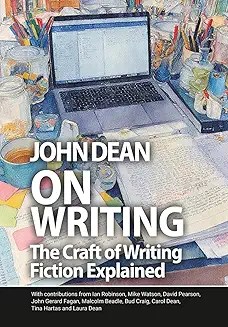
It can purchased in ebook and paperback format on Amazon.
May 20, 2026
Letting your characters speak for themselves
I would argue that, as an author, you cannot under-estimate the importance of dialogue. It does so many jobs for you, imparts information, provides colour, adds to readers’ understanding of characters (and that of the authors as well), injects energy into scenes, creates the conflict that lies at the heart of all stories, moves plots on etc.
There are some rules that you need to use if you want your dialogue to work (and you do, poorly written dialogue can wreck a story). They include
We tend to talk in short, sharp snaps of dialogue so a writer should aim to get rid of most of the social niceties. Don’t remove them completely because you still want conversations to sound natural, but remember that dialogue in novels needs to cut to the chase a lot quicker than in real-life
We assume a lot. If you are talking about a relative, we tend not to say ‘How’s your sister, Barbara?’ We tend to say ‘How’s your sister?’ If there’s more than one sister, we tend to say ‘How’s Barbara?’
Good writers do not cram detail into dialogue. We say ‘I’ll meet you by the bus stop’, not ‘I’ll meet you by the bus stop on Green Road, by the corner shop, opposite the park gates, next to the bins’. Good writers find other ways to drop in information.
Good writers inject energy into dialogue. They make their characters do things while they talk – make the tea, hang up the washing, overtake a lorry on the motorway etc, all of which gives the conversation context and injects life.
It’s a good idea to give the characters conflicting goals. One of them wants one thing from a conversation, the other wants something else. Even if it doesn’t end in a shouting match, the underlying tension will keep the readers turning pages.
Dialogue should drive the story forward. Every line should do a job.
Don’t have characters all sounding the same – give them distinct voices (I don’t mean use lots of slang/dialect unless your stories are written in such language), just make it sound like they are separate people so that the reader can instinctively tell them apart.
And finally, work and rework your dialogue, take measures to smooth it out, remove a line here, add a word there until it works, be subtle if needed, brutal with the delete button if you have to be. If it takes an hour to perfect a passage then so be it.
Then, after all that, you will have dialogue that sounds like real people talking and your story will be much the better for it.
April 30 2026
Re-learning lessons
I am fascinated, by the way the writer’s mind works. An example; I am finishing the edits on the new DCI Blizzard novel and will then move on to finishing the new Jack Harris book.
One of my big messages with dialogue is don’t overdo it and yet.a quick glance at my Harris shows I have made that mistake time and time again – eight lines used when four will suffice, explaining something in stodgy dialogue when it needs to be sharper.
Why do authors make that mistake when they know it’s wrong? I include it in my book on learning to write fiction, for Gawd’s sake!
The answer is knowing what needs to be done – and then doing it. The good authors will put it right. The ones who ignore this message are unlikely to break into print.
April 2 2026

Let your characters do some of the work
Writing has the capacity to keep teaching authors the same lesson and one of the most important ones is to allow your characters to play their part in the process.
What do I mean by that? Well, I am working on the latest DCI Jack Harris novel and the ideas have been coming thick and fast – indeed, I have had to be disciplined and hold some back for future books. Then suddenly it all stopped, the ideas I had selected stalled and writing became slow and difficult.
The solution, as so often, has been to let my characters take over. I relied on their dialogue without doing any planning, just letting them speak and seeing where it took me. Very soon, the momentum was back because one line of dialogue required a response and so on. If the dialogue is working you are guaranteed to inject new life into your story. It’s an organic and natural process and you’ll be amazed at what emerges if you try it. The result in this case was that new ideas emerged and the novel has been given extra depth as a result. And all I had to do was the typing!
August 24 2025
Opening up new opportunities

I have written many times before about how fascinating I find the organic nature of writing, as opposed to the more controlled planning process, but I think it’s worth returning to the theme from time to time in order to remind authors of the importance of letting stories develop themselves where possible.
My work on the first draft of the latest DCI John Blizzard crime novel is a case of point. When I was planning the book, I had, as usual, a basic synopsis mapped out, focusing my mind on the thread of the story before I began to write.
The synopsis had developed a single storyline but sitting alongside it were what I can best describe as fragments of information that popped into my mind, including three several female characters whose job titles were all I knew about them.
I have been working to introduce more diverse characters into my novels, including more women in order to correct my concern that the series was too male-dominated.
All I knew about the three women who came to mind were that they all been recently appointed to head up the police force’s surveillance, economic crime and cybercrime units.
Suddenly exciting opportunities opened up and I sense that all will become regulars in the series.
Their appearance meant that, as the story developed in this novel, I could explore new themes – the changing face of the police service, the blight of mysogony, and the struggles of an old school copper like John Blizzard to come to terms with the impact of digital crime.
The result? Several sub-plots were born and a theme introduced that allowed me to conclude a story line that had always felt important but had remained unfinished and largely ignored in previous books.
August 7 2025
Creating ‘real’ characters

Here’s an interesting exercise that an author at any stage of their development can use when they are working on their novel and need to ensure that they have created ‘real’ characters.
Select your character and jot down 20 things about them without hesitation.
If you can do that in a minute or so you have a ‘real’ character; if you struggle to get there then you still have work to do.
If it helps focus your mind, when you are writing your list, include four physical characteristics, four key events in their past which shaped the person they have become, four main elements of their personality (such as generous, secretive, irritable, easy-going etc) four details about their job (or how they fill their time if they don’t have a job) and four things which helps them fill their spare time (such as walking the dog, reading, enjoying a drink, birdwatching.
Use those sections and you will soon have your twenty entries for your list. Add things like their worst fear, their biggest achievements, their biggest regret, details of their home, their living arrangements, their relationship, their family/friends etc etc and your list will soon soar past 40.
That it does so is important because it gives you and the reader the feeling that this is a real person and not a cardboard cut-out – and, as an added bonus for the writer, it will provide many potential ideas for plots that are worth exploring.
Picture used courtesy of Pixabay/www.pexels.com
Will the real Jack Harris please step forward?
The origins of fictional characters has always fascinated me, particularly the extent to which many creators draw on real people as a starting point.
I talk to a lot of authors and many of them freely admit that some of their major characters are partly taken from real life.
I have no problem with that – I do it myself – but you have to be careful if you do it. You would be advised not to simply lift a real person lock, stock and barrel and drop them onto the page.
When I draw on a real person it tends to be just the start of the process and I will only use a small part of their make-up. Maybe it’s their physical appearance, big, small, athletic etc. or one or two elements of their personality, affable, irritable, nervous, irreverent.
From that starting point, creativity takes over as the building of the character begins. Ideally, the inspiration for the character should not be able to recognise themselves in the final version as the real person is subsumed into someone new and unique.
Can I give an example? Well, yes, I can – my detective chief inspector Jack Harris. He began life with a ‘lift’ from a real person, namely a police officer I interviewed several times, and very much admired, during my career as a crime reporter.
Harris is not him and he is not Harris, but my fictional character’s physical appearance is very much based on the real one – tall, muscular, strong-jawed, blue-eyed and with a fondness for hilly and mountainous landscapes.
After that, the character of Jack Harris became pure fiction but it helps me as a writer to have the real person in mind as I write.
Does the real police officer know he is the inspiration for Jack Harris? I would very much doubt it, I certainly never told him, and it is twenty five years since I last met him. I imagine he’s retired by now.
And what about the main character in my other long-running detective series, you may well ask? Well, DCI John Blizzard started with my inability to wear a tie properly (it quickly goes to half-mast) and was built up from there. However, the rest is fictional, based on how I would like a detective to be, operating without fear or favour in pursuit of justice.
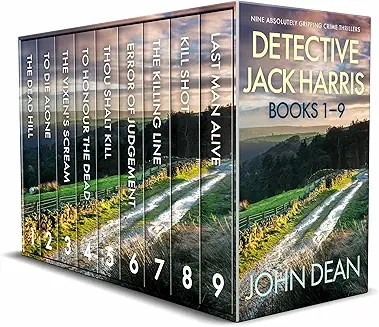
The first nine DCI Jack Harris novels are available in a best-selling ebook format boxset for just 99p on Amazon. Key in Detective Jack Harris Books 1-9 at https://www.amazon.co.uk to purchase your copy.
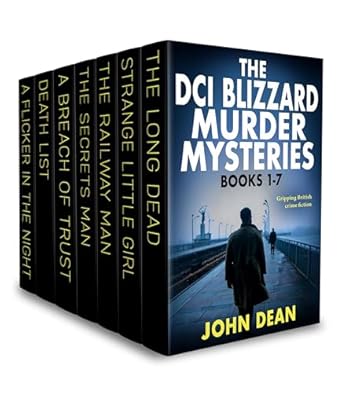
The first seven John Blizzard novels are available in an ebook format boxset for £6.99 on Amazon. Key in The DCI Blizzard Murder Mysteries 1-7 at https://www.amazon.co.uk to purchase your copy.
Sense of place
These Handy Hints sections are offered for emerging writers to use absolutely free of charge and I will add to them from time to time. If you find them useful, I have brought everything I know about the craft of fiction into a book called On Writing. Covering everything from creating plot and place to characters and tension, from how to beat writers’ block and how to translate the author’s personal experience into compelling fiction, from taking in an overview of the opportunities presented to emerging writers by the dramatic changes in the publishing industry and including John’s thoughts on approaching publishers and agents and preparing manuscripts for self-publishing, the book is available in ebook (99p) and paperback £5.00 formats on Amazon. On Writing also has expert contributions from authors, publishers, editors and experts working with literary organisations and builds into a compendium of valuable advice for writers seeking their big breakthrough. You can also hire editing, mentoring and proofing services through John. Details are included in the Editorial Services page on the main menu.
Why a tree can teach authors a salutary lesson
Getting description right
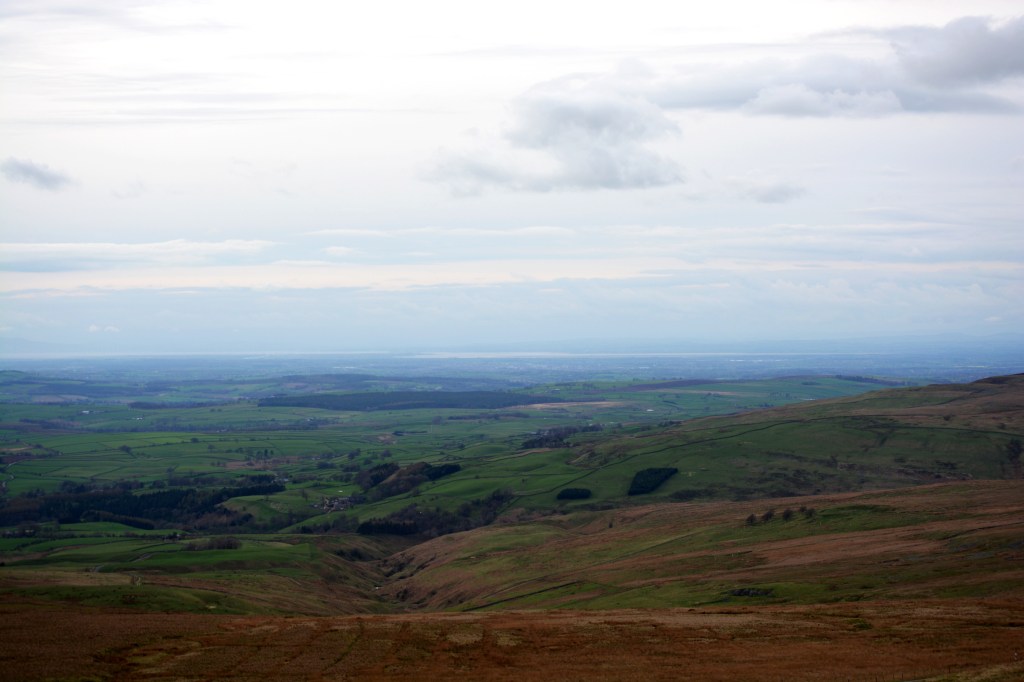
As described in the other articles in this Handy Hints section, creating a powerful sense of place is crucial for authors. So, how do you go about creating it?
Well, I think there are several things you need to do, the first of which is to give the reader enough visual information to create a picture of the place.
There’s a lot of debate among writers about how much description you should use and I can see the argument for being sparing on the details, although having said that, I do agree that done well, longer description can make for compelling reading (to reinforce my point, I recommend that you seek out the work of Scottish crime writer Peter May. The man’s a magician when it comes to describing places and I am happy to read longer passages if it is done so well).
But there is another school of thought, that description of places should be short and sharp, not overdone, and I can see the argument for that as well, particularly if you are a writer who is not that good with description.
Those who argue that shorter is better say that it makes sense to keep your description relatively tight because too much can slow your pace. However, and this is vital, you still need to provide at least some clues. Take a leaf out of flash fiction’s book, identify what you think the most important things are about a place and describe them. Even if you do that sparingly, the reader will build up the place for themselves in their mind because good writing is about triggering a response in the reader, bringing out memories.
For instance, you could spend three paragraphs describing the differing colours and hues of the forest – and it might be wonderful writing to book -but it might be enough just to say that the conifer woodland stretched away into the distance until it gave way to moorland. We all know what a forest looks like and we can all visualise a moor.
If my instinct is correct, in my giving you those two facts you will already have thought of a place you know. So what if you see a different forest than I did when I typed those words? As long as you see a forest what does it matter?
Apart from visual clues a writer needs to go further and use the senses – take the forest, again; one of the most striking sensations is the smell, of the dead and dying undergrowth beneath the canopy perhaps, or maybe of the sound of a stream somewhere through the trees, unseen but heard. Again, two or three fragments of description but I bet you have conjured up a forest you know. And if you haven’t but want to create one – pull on your boots and head out on the forest path with a notebook.
But for me there has to be a third aspect to this and that is what does it feel like to be there? If a normally brave character becomes scared in the forest, for instance, you have told the reader how the place feels and triggered off all sorts of reactions in your reader. You will have made them feel and that’s what you want to achieve.

