Opportunities open up for authors in a dramatically changing world
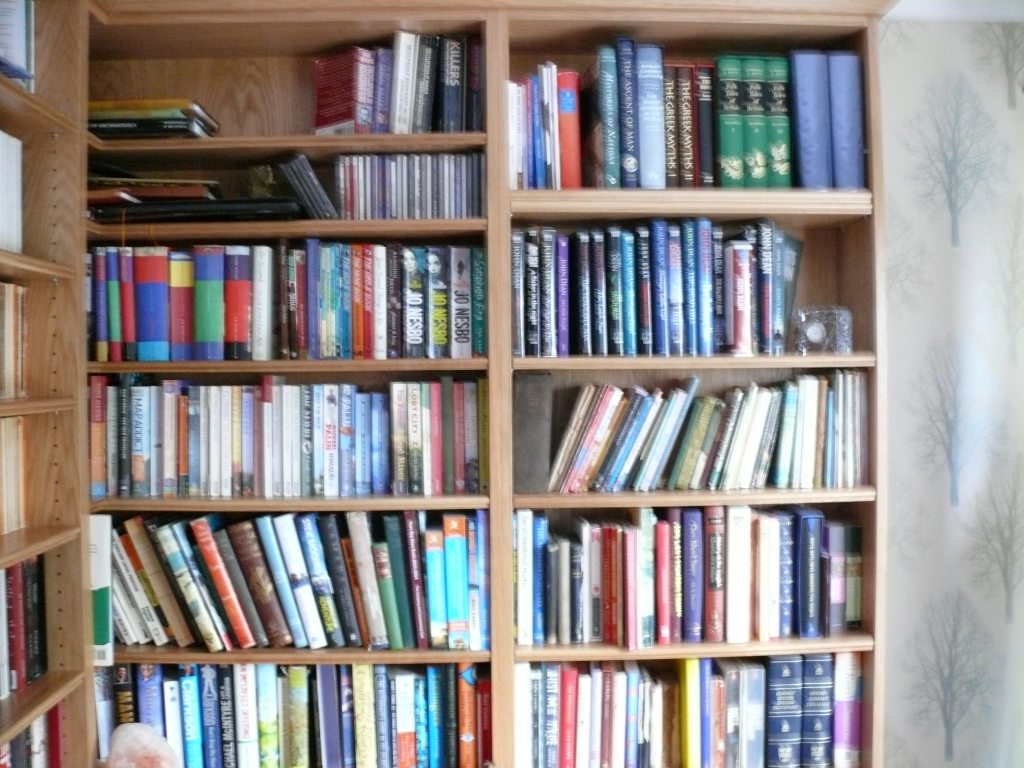
As you can imagine, I keep a close eye on publishing trends and the beginning of a New Year is a good time to pull together some thoughts – and, as we enter 2026, they are thoughts that should offer hope for all those unpublished writers out there who are seeking that all-important breakthrough.
You will hear some writers, both published and non-published, coming up with gloomy prognostications about the book trade but I beg to differ. These are exciting times, boom times even, it’s just that with boom times come increased competition. Publishers have so much talent to choose from, it can sometimes feel dispiriting if you are awaiting your big breakthrough.
Understanding the dramatic changes in the publishing industry will help unpublished writers to increase their chances of success.
The truly remarkable transformation in recent years has been driven primarily by technological innovation that is changing customer behaviour and global sales trends.
The traditional model, where print books were the primary focus for publishers and the emerging idea of digital ebooks were given a lower priority, has been turned on its head in many sectors with publishers selling many more digital books than hardcopies.
The opportunities that technology has presented has seen many small publishers created and small ones rapidly becoming much larger, and more and more influential with their fleet-of-foot approach to bringing new authors to market, as well as many more writers able to self-publish their work in an increasingly professional manner.
This has been made possible by the opportunities offered by retail websites like Amazon. Whatever you think about Amazon, they do sell books and open up opportunities. In addition to the sale of books, subscription services like Kindle Unlimited, where readers pay page by page, have gained substantial market share.
Also, print-on-demand technology has revolutionised the economics of physical book production because, by removing the need for large print runs and storage space in a warehouse, printing books is economically viable even for niche titles with limited audiences.
Another result of technological developments is that publishing has become increasingly global with the removal of the traditional barriers to international distribution, allowing publishers access to international markets.
Adding to the changes are the fact that smartphones have become a primary reading device for millions of consumers worldwide.
Finally, audiobooks, once a niche format primarily serving the visually-impaired and commuters, have hit the mainstream in a big way, growing at double-digit rates annually for several years. Some companies are offering technical services at such competitive prices that small publishers and authors who self-publish can now produce their own audiobook versions of their titles.
It is also worth remembering that books are still sold in huge numbers by big-name high street stores, and independent bookstores, the latter having experienced a resurgence, with their numbers growing steadily over the past decade, relying on the expertise of their owners/staff, the highly personal service they offer and their position at the heart of their communities. In the age of the digital book and the likes of Amazon, small, independent bookshops like my local one, Gallovidia in Kirkcudbright in Dumfries and Galloway, need, and deserve, our support.
The move towards digital, and away from print, has been particularly popular in genres such as romance, science fiction and crime fiction, where digital readership is particularly strong but so, too, is the hardcopy tradition with sales remaining robust, despite the competition from digital.
Just as technology is changing publishing, so are readers’ tastes, as ever, and a number of organisations take the New Year as an opportunity to assess where the industry is going in the next twelve months (definitely worth checking out their websites for the full story).
Such studies point to dramatic changes in content as well as technology. Take Bookshelf at www.bookshelf.com. Its recent prediction for ‘What’s going to be hot in 2026’ include the prediction that romance, which has been the bestselling category in publishing for years, will stay on top in 2026 but that readers are increasingly seeking out genres that blend romance with other popular elements, such as Romantasy (a mixture of romance and fantasy). Bookshelf predicts growth in mixtures of sports romance, dark romance, and sci-fi romance, because they are new and fresh.
Bookshelf also predicts continued growth in cozy fantasy, continuing a trend which started in the early 2020s and which features heartwarming adventures containing little jeopardy. Bookshelf predicts a growth in cozy sci-fi—gentle, character-driven stories set in futuristic or spacefaring worlds. Readers want comfort and escapism, and this demand won’t fade any time soon, its team say. Readers, they say, are also looking for cozy mysteries, cozy romances, and even cozy horror.
Bookshelf predicts an increase in books recalling the pop culture of the late 1990s/2000s, which, it says, will resonate with millennial readers looking for comfort in familiar settings.
One startling prediction is that the clock will go back to the time of Charles Dickens as digital platforms breathe new life into the format of serialised storytelling. Stories used to be serialised in printed magazines but now the concept is moving onto digital platforms.
Also, says Bookself, more and more readers are investing in special editions, versions of hardcopy books with maps and the like.
Another major force shaping 2026 will be the rise of translated fiction. Korean fantasy, Chinese romance, and Latin American speculative fiction are already increasing their reach and Bookshelf says that streaming platforms have proven that audiences are hungry for global stories (it works both ways, with books written in English being translated).
Among other organisations making their predictions have been Book Browse (www.bookbrowse.com), whose predictions for 2006 include audiobooks continuing to trend upwards. The Audio Publishers Association reports that as of 2025 more than half of Americans eighteen and older have listened to an audiobook, and interest rose by 6% from 2024, driven by the fact that it’s a convenient way of consuming stories. The pictures is similar elsewhere, including the UK.
Bookbrowse agrees that deluxe special editions will continue their upward trend. Once mainly reserved for classics, fantasy, and Young Adult (YA) books, it says that deluxe editions have become more common in the genres of historical fiction and contemporary literature for adults. This is happening, says Bookbrowse because readers who read digital formats want something special in the physical books they own.
Publishing State (https://publishingstate.com) says in its predictions that readers are consuming more content than ever, and the global book market, including print and digital, remains robust, with projections suggesting its total revenue will comfortably exceed prior-year figures.
It says that technical advances in editorial, design, and production processes allows publishers to capitalise on topical non-fiction or rapidly produce backlist titles in new formats, such as audiobooks.
Publishing State says: “If print is the anchor and e-books the sturdy sail, audio is the wind driving the industry forward. Building from the 2025 trend, the global audiobooks market is experiencing rapid growth, with a projected value between $13 billion and $18 billion by 2026, driven largely by the convenience of listening during multitasking activities such as commuting, exercising, or household tasks. This growth is forcing publishers to view audio not as a subsidiary right, but as a primary format, often developed simultaneously with the print and e-book editions.”
Publishing State says that the next frontier for digital publishing involves merging text through the likes of augmented reality (AR) and virtual reality (VR) technologies.
It says: “Imagine a medical textbook where a reader can scan a diagram with their phone and instantly see a 3D, manipulable organ model hovering above the page, or a historical fiction novel where AR overlays bring a medieval city to life through your tablet screen. This ‘immersive content’ market is growing exponentially, demonstrating a consumer willingness to pay for enriched experiences.”
For all those readers, like me, who fear for the future of printed book in a digital world, Publishing State has words of reassurance: “For all the digital disruption, the print book remains remarkably resilient, maintaining a majority share of the consumer book market. However, its continued success in 2026 hinges on a dual reinvention: aesthetic appeal and environmental sustainability. Print is becoming a luxury or collectible item, moving away from being a mere vessel for text. This involves a focus on high-quality production, unique cover treatments, special editions, and beautiful binding that digital cannot replicate. People want print books to own, to display, and to gift.”
It adds: Crucially, the publishing industry is finally getting serious about its environmental footprint. Consumers, especially younger readers, are increasingly factoring sustainability into their purchasing decisions. This is driving a trend toward Print-on-Demand technology for smaller runs to minimise waste and a broader adoption of recycled, certified paper stocks. Publishers who can credibly demonstrate a commitment to carbon-neutral production, transparent supply chains, and reduced obsolescence will gain a significant reputational advantage in a marketplace that demands corporate responsibility.”
 John Dean - Crime Writer