John Dean has worked with a number of authors. This page includes profiles of some of them
Malcolm ‘Mally’ Beadle – Darlington author latest to seek inspiration from the American landscape
The Northern Echo’s Weekend Supplement recently published a feature written by myself (February 21, 2026) about author Carol Dean, whose titles include a series of non-fiction books telling the true myth-busting story of Native American history rather than the Hollywood version.
Her series has made her an acknowledged expert on the subject but she is not the only Darlington writer to have been inspired by the open landscapes, big skies and bustling cities of North America.
Indeed, there is a strong tradition of authors who live in the town but who turned to the United States for inspiration, the latest example of which is forklift driver Malcolm Beadle, who sets his stories among the cast of characters drifting across the American plains.

Malcolm, known as Mally, is in good company; in addition to Carol Dean, other Darlington authors who looked to America for inspiration include two writers of Westerns. Prolific author Albert Hill, known to his readers as Elliot Conway, had the first two Westerns of many accepted for publication in 1987 when he was in his mid-sixties, and Tex Larrigan was actually successful Romance writer and Darlington grandmother Irene Ord who turned to writing about the fictional Wild West. Then there was prolific author Bill Newton, the leader of the Conservative Group on Darington Borough Council and Borough Mayor, who wrote 125 crime thrillers, featuring investigators including Joey Binns and Miles Dresser, titles evoking memories of significant stores on Darlington’s High Row, and which were translated into 13 different languages.
Mally, who works at a recycling centre, said: “I did not know any of the other Darlington writers who found themselves drawn to America but can guess what it was about the United States that inspired them. For me, it was the strong characters to be found there and the atmospheric landscapes which can be used as a backdrop for your novels.
“I am always very honest with people and say that one of the big inspirations for me is the America which creates the background for Jack Reacher, the former major in the US Military Police created by best-selling author Lee Child. I am drawn to the idea of hitchhiking or taking the bus as he drifts around the wide open spaces of America. It’s a rich territory for authors to explore, either in person on trips out there or are via the Internet, and it’s a constant inspiration.”
Mally may be in good company with the other Darlington authors but he’s a long way behind them in terms of books published – but then he had a late start. His first book, a novella entitled Koki, came out in 2025 and can be traced back twenty years to when he took screenwriting and creative writing classes at Darlington Arts Centre, unlocking an outpouring of ideas for stories from an imagination that had felt restrained for many years.
Too many stories, as it turned out, and the problem was that he had so many ideas that he found himself struggling to focus on one, in particular, and it was only a stroke in 2023 that persuaded him to concentrate on one of them and he chose Koki.
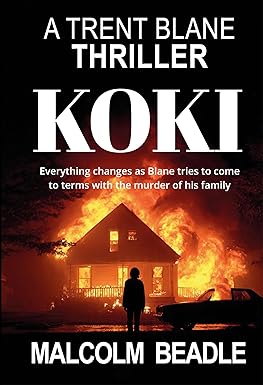
Mally said: “America was always a catalyst for my ideas and the debut novella was inspired by the impact on Americans of the Vietnam War. The novella introduces the readers to Army sniper Trent Blane, who is operating alone in the jungle. Blane is no ordinary sniper. Having abandoned the only job he has ever known, working as a clown called Koki in Rodeo shows across the United States, he paints his face as a clown before heading off on his manhunts in the steamy jungles of Vietnam. I have always thought that the best writing is visual and the idea of a sniper made up like a clown was, I thought, a powerful one, particularly as a lot of people find clowns scary.”
The sequel, Koki’s Last Dance, which is a full-length novel, allowed Mally to send Trent back to America’s Civvy Street, a world of slugs of whisky at roadside bars and American muscle cars with growling engines. He has Koki working for the CIA then the FBI, and facing up to people seeking to kill him, and the writing took considerably less time to complete. The book was published earlier this year (2026).
Mally said: “The decision to send Koki back to America for the sequel was driven entirely by my fascination with him as a character and also the stunning landscape in which I set my story. I do not shy away from telling people that I draw some of my inspiration from the Jack Reacher novels. I think people appreciate knowing that your novel is the type of story they will enjoy. Many publishers liken their publications to other well-known stories as a deliberate marketing tool.
“However, it is important that they know that you are not telling the story of Jack Reacher. You are telling your story. You think that your plot is original, one of a kind, but it’s far from it. Every story has been told before and you are telling it in your own way. Your place, time and characters are your chance to make it different.”
Mally’s is a great believer in letting his characters and plots develop naturally. He said: “Your plot is your guideline. If by the third chapter, you come up with something better, then drop something to make way for it, and put the new idea in there. The plot might say that a character was going to make it to the end of the story, but the story might change, and that character might get killed off, along with some other main characters.
“If your story starts morphing into something different, don’t hold it back, run with it and see where it takes you. If you don’t like it, you can always cut it out and save it for another story.
“As an author, you will have also read lots of books, and learned from them, so you know what feels right and what doesn’t, what fits and what doesn’t fit. I personally watch my stories as if they were a movie in my head. It’s a good way of seeing if it works.”
Talking of movies, Mally is ambitious. He said: “I watched the movie Top Gun again. I thought that they should have made a follow-up, so, I started writing a script for Top Gun 2! The weeks turned into months, and I finally finished the script. Maverick was the lead character, of course, and I had to create a whole cast of new characters and some situations.
“While I was tightening the script up, my son came into the room and told me that Tom Cruise and some other guy were writing the script for the new Top Gun movie. I swore. Quite a lot! Then I went into the kitchen and threw the script in the bin. Later, I retrieved it from the bin and started doing a total rewrite. Instead of just changing the characters, I changed the story, and I think it worked out better. As it turned out, Tom Cruise’s script was way different than mine. I couldn’t get an agent, I didn’t know what to do with my script, so took the easy way out and threw it away!”
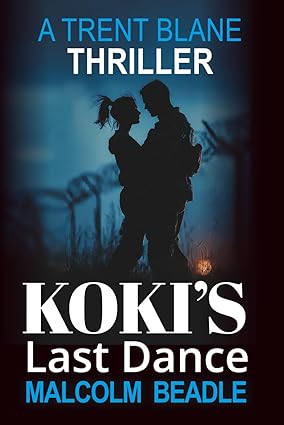
Mally’s Koki books can be purchased in ebook and paperback formats on Amazon.
Carol Dean – an author whose background provides a surprise
Author Carol Dean has become one of the foremost writers on Native America over recent years with eleven books on the subject to her name. Her Native American history series has covered everything from the Apache and Chief Sitting Bull, to a biography of the last Comanche chief, the little-known Quanah Parker, her account of the role of the Navajo as World War Two codebreakers and her latest title, a biography of Buffalo Bill, which unearthed some facts about the great showman of which most people would not be aware.
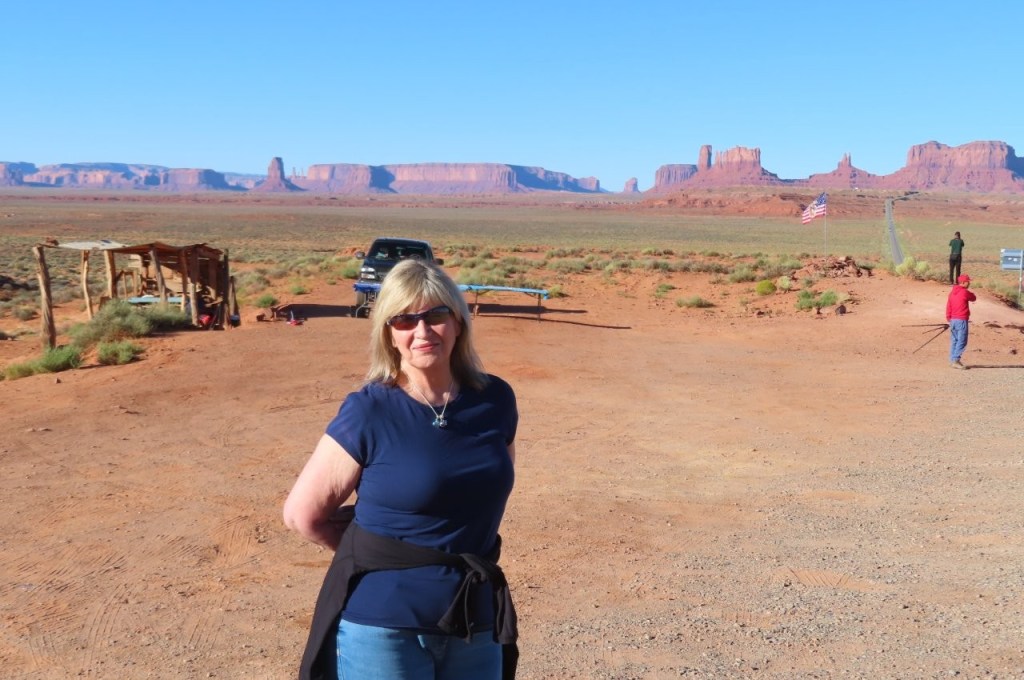
However, she keeps the biggest surprise for herself because, although new readers would perhaps expect to discover that Carol lives in North America, maybe even in the shadow of the mighty Sierra Nevada, she actually lives in a quiet corner of Darlington, in South Durham.
The key to success for Carol – whose books are read worldwide – is that not only does she chronicle the lives of well-known Native Americans, but she also has a fascination for telling the stories of the people whom history largely forgot.
Her books are based on meticulous research, including trips to North America to ensure that she has an innate understanding of her subject.
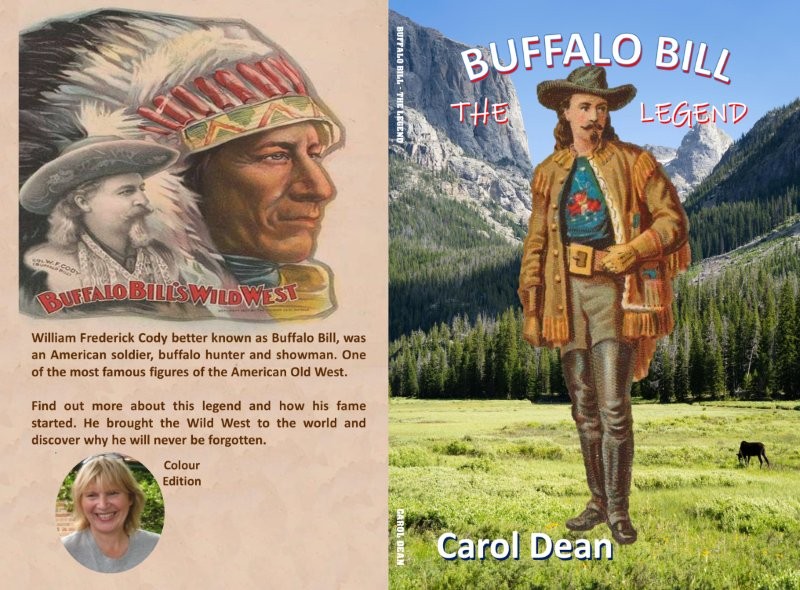
Buffalo Bill The Legend is a good example of the care that she takes. Most people know the great showman’s basic story but Carol went further for her book and unearthed little known facts such as his support for women’s suffrage, his progressive approach to conservation – he supported the idea of a hunting season to protect animal populations – the fact that he was a Freemason and also that he became an icon for gangs operating in the Belgian Congo in the 1950s.
Carol said “It might seem odd that a former South Shields girl now living in Darlington would want to write about Native Americans, but it’s not really.
“As a very small child, my grandad gave me an encyclopaedia on ‘Cowboys and Indians’. This book was beyond my skills to read as I was only about four or five years old at the time but I came to love the images inside. Once I could read it, my concept of ‘Cowboys and Indians’ changed dramatically because it was the truth about what really happened. I was brought up on John Wayne films and still enjoy watching them, but it wasn’t like that at all.
“The interest stayed with me for years, but that’s all it was. An interest. I read books about my heroes Geronimo, Cochise, Chief Sitting Bull, but still never thought about doing anything myself until we went on holiday to Yellowstone.
“We visited an Indian Trading Post and I wanted to move in. It was tremendous. I found this fabulous photo of a very striking, proud-looking Native American Comanche Chief and just couldn’t leave without buying it. When we returned home, I made a pledge to this Native American that I would find out about him.
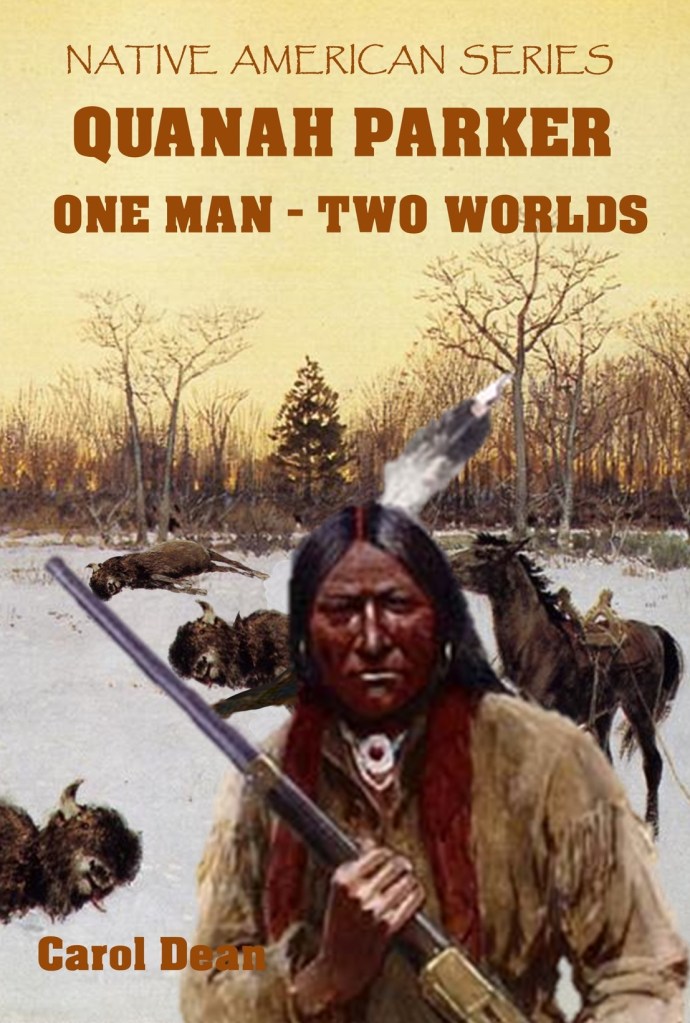
“I did and was amazed that this man Quanah Parker, the last Comanche Chief, had made such a huge mark on American history. My book and accompanying talk Quanah Parker- One Man Two Worlds was my tribute to this fantastic man. I kept my promise to him and he, in turn, inspired me to continue writing about all those heroes of mine, making a series of Native American Books.
“This also led to discovering that the Navajo were prominent during World War II, as codebreakers for the Americans battle against the Japanese. Native American languages had been used during the First World War and were successful but this time, something different was needed.
“The Navajo language was chosen and it is so complex that it was ideal to use as code and being the culture that they are, they devised extra words to cover military names that they did not have in their vocabulary. Only a native Navajo can speak and write the language it is so complex.
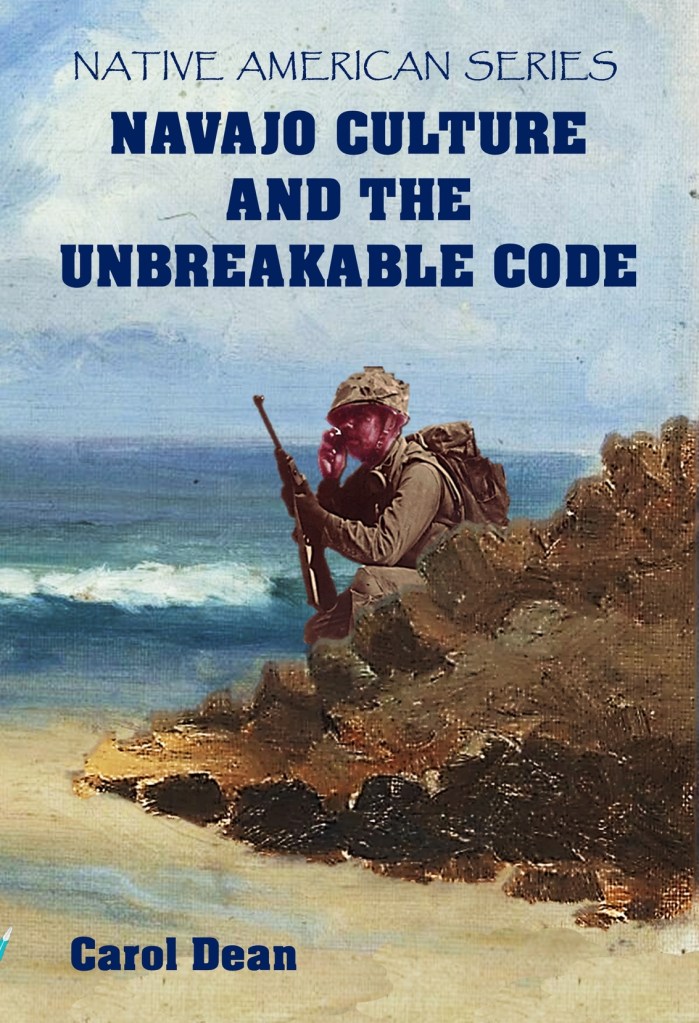
“The language totally foxed the Japanese and helped win the war, apparently. This inspired more research culminating in a book called ‘Navajo Culture and the Unbreakable Code’ and a talk of the same name.
“But even though the research on Native Americans was a creation of new knowledge for me, I felt it right and proper that I continued my series by writing about ‘The Days of the Old Wild West’ with the cardsharps, the legends, the frontier men and not forgetting those buffalo hunters, too.
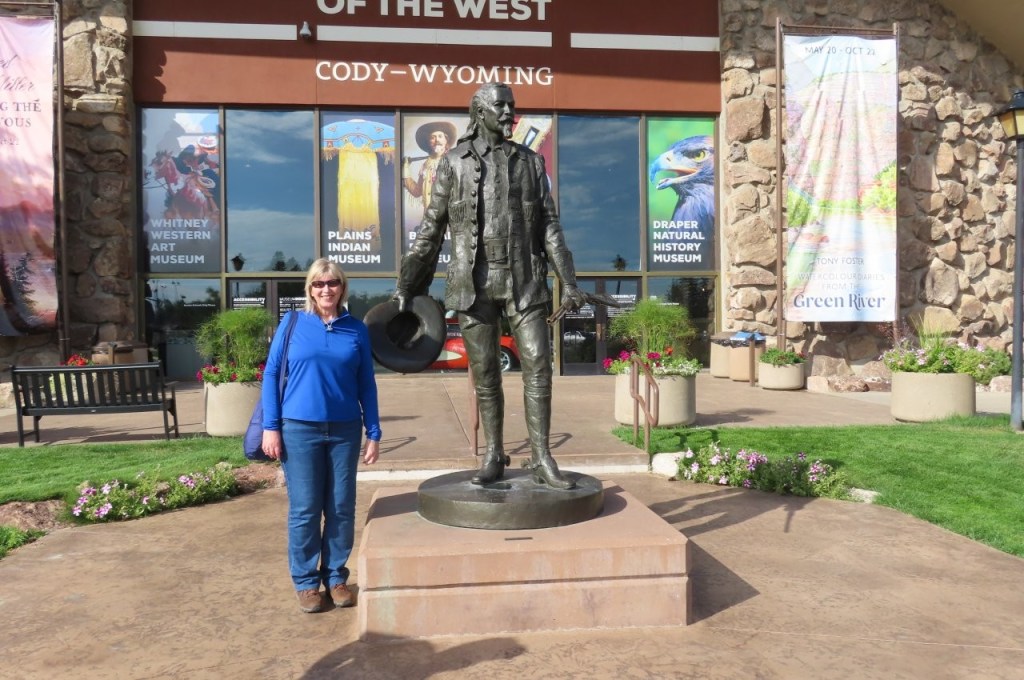
“One buffalo hunter, in particular, piqued my interest on another trip to America where Cody, Wyoming was the destination.
“Buffalo Bill Cody was his name and many know of him, and I thought I did, too, until the research started. I was not the only person to have an interest in the remarkable man and this made my research vastly interesting and a huge learning curve to gain knowledge of everything he had achieved.
“After the visit to Cody and the superb Buffalo Bill museum there, I knew I had to write my tribute to this amazing man’s life. Buffalo Bill – The Legend has just been released with a talk almost ready to present to groups locally.
“For me, it was brilliant, during my research, to read how highly thought of he was. He was a living legend and called the ‘spirit of the west’. I feel he was the Wild West and he, through his Wild West Exhibitions – he did not like the word ‘show’, he felt his events were more educational than simple entertainment – brought the Wild West to the audience and they loved it.
“His life inspired writers of dime novels and plays to be written about this man. And many films have and will continue to be shown about this exciting life he had. He was no doubt a forward thinker, supporting suffragettes openly and always having talented females as part of his cast. His planning was meticulous and his exhibitions epitomised the Wild West and gave it life again. Millions of people would agree as millions turned up over the years to witness his exhibitions.
“I hadn’t realised how long and far he had travelled with the exhibitions, nor the amount of famous people that he had as cast members. And to discover that he had toured right on our doorstep in South Shields. That this was the memory my wonderful grandad had of Buffalo Bill and that he had actually seen the exhibition
there when he was only two years old in 1904. How fabulous. It makes you want to start writing, or it did me anyway. The legend lives on.
“So, it really doesn’t matter where you come from. If you have an interest that really inspires you to learn more about it or even write about it, then go for it. I did and I still am. There is still so much to learn with so many other people and places to research and it’s an adventure of discovery every day.”
LIST OF BOOKS IN THE NATIVE AMERICAN SERIES
Comanche Life
A Man Called Sitting Bull
Geronimo and Cochise – Two Apache Legends
The Trail of Tears
Quanah Parker One Man – Two Worlds
They Too Played Their Part
Where Everyone Knows Her Name
The Footsteps They Left Behind
Navajo Culture and the Unbreakable Code
Days of the Old Wild West
Buffalo Bill – The Legend
The series can all be purchased on Amazon.
 John Dean - Crime Writer