April 2 2026

Let your characters do some of the work
Writing has the capacity to keep teaching authors the same lesson and one of the most important ones is to allow your characters to play their part in the process.
What do I mean by that? Well, I am working on the latest DCI Jack Harris novel and the ideas have been coming thick and fast – indeed, I have had to be disciplined and hold some back for future books. Then suddenly it all stopped, the ideas I had selected stalled and writing became slow and difficult.
The solution, as so often, has been to let my characters take over. I relied on their dialogue without doing any planning, just letting them speak and seeing where it took me. Very soon, the momentum was back because one line of dialogue required a response and so on. If the dialogue is working you are guaranteed to inject new life into your story. It’s an organic and natural process and you’ll be amazed at what emerges if you try it. The result in this case was that new ideas emerged and the novel has been given extra depth as a result. And all I had to do was the typing!
August 24 2025
Opening up new opportunities

I have written many times before about how fascinating I find the organic nature of writing, as opposed to the more controlled planning process, but I think it’s worth returning to the theme from time to time in order to remind authors of the importance of letting stories develop themselves where possible.
My work on the first draft of the latest DCI John Blizzard crime novel is a case of point. When I was planning the book, I had, as usual, a basic synopsis mapped out, focusing my mind on the thread of the story before I began to write.
The synopsis had developed a single storyline but sitting alongside it were what I can best describe as fragments of information that popped into my mind, including three several female characters whose job titles were all I knew about them.
I have been working to introduce more diverse characters into my novels, including more women in order to correct my concern that the series was too male-dominated.
All I knew about the three women who came to mind were that they all been recently appointed to head up the police force’s surveillance, economic crime and cybercrime units.
Suddenly exciting opportunities opened up and I sense that all will become regulars in the series.
Their appearance meant that, as the story developed in this novel, I could explore new themes – the changing face of the police service, the blight of mysogony, and the struggles of an old school copper like John Blizzard to come to terms with the impact of digital crime.
The result? Several sub-plots were born and a theme introduced that allowed me to conclude a story line that had always felt important but had remained unfinished and largely ignored in previous books.
August 7 2025
Creating ‘real’ characters

Here’s an interesting exercise that an author at any stage of their development can use when they are working on their novel and need to ensure that they have created ‘real’ characters.
Select your character and jot down 20 things about them without hesitation.
If you can do that in a minute or so you have a ‘real’ character; if you struggle to get there then you still have work to do.
If it helps focus your mind, when you are writing your list, include four physical characteristics, four key events in their past which shaped the person they have become, four main elements of their personality (such as generous, secretive, irritable, easy-going etc) four details about their job (or how they fill their time if they don’t have a job) and four things which helps them fill their spare time (such as walking the dog, reading, enjoying a drink, birdwatching.
Use those sections and you will soon have your twenty entries for your list. Add things like their worst fear, their biggest achievements, their biggest regret, details of their home, their living arrangements, their relationship, their family/friends etc etc and your list will soon soar past 40.
That it does so is important because it gives you and the reader the feeling that this is a real person and not a cardboard cut-out – and, as an added bonus for the writer, it will provide many potential ideas for plots that are worth exploring.
Picture used courtesy of Pixabay/www.pexels.com
Will the real Jack Harris please step forward?
The origins of fictional characters has always fascinated me, particularly the extent to which many creators draw on real people as a starting point.
I talk to a lot of authors and many of them freely admit that some of their major characters are partly taken from real life.
I have no problem with that – I do it myself – but you have to be careful if you do it. You would be advised not to simply lift a real person lock, stock and barrel and drop them onto the page.
When I draw on a real person it tends to be just the start of the process and I will only use a small part of their make-up. Maybe it’s their physical appearance, big, small, athletic etc. or one or two elements of their personality, affable, irritable, nervous, irreverent.
From that starting point, creativity takes over as the building of the character begins. Ideally, the inspiration for the character should not be able to recognise themselves in the final version as the real person is subsumed into someone new and unique.
Can I give an example? Well, yes, I can – my detective chief inspector Jack Harris. He began life with a ‘lift’ from a real person, namely a police officer I interviewed several times, and very much admired, during my career as a crime reporter.
Harris is not him and he is not Harris, but my fictional character’s physical appearance is very much based on the real one – tall, muscular, strong-jawed, blue-eyed and with a fondness for hilly and mountainous landscapes.
After that, the character of Jack Harris became pure fiction but it helps me as a writer to have the real person in mind as I write.
Does the real police officer know he is the inspiration for Jack Harris? I would very much doubt it, I certainly never told him, and it is twenty five years since I last met him. I imagine he’s retired by now.
And what about the main character in my other long-running detective series, you may well ask? Well, DCI John Blizzard started with my inability to wear a tie properly (it quickly goes to half-mast) and was built up from there. However, the rest is fictional, based on how I would like a detective to be, operating without fear or favour in pursuit of justice.
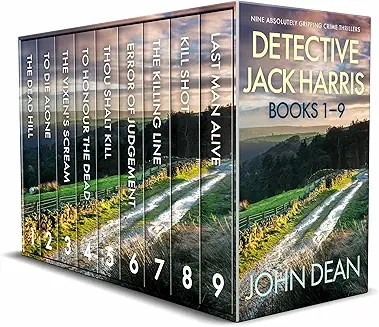
The first nine DCI Jack Harris novels are available in a best-selling ebook format boxset for just 99p on Amazon. Key in Detective Jack Harris Books 1-9 at https://www.amazon.co.uk to purchase your copy.
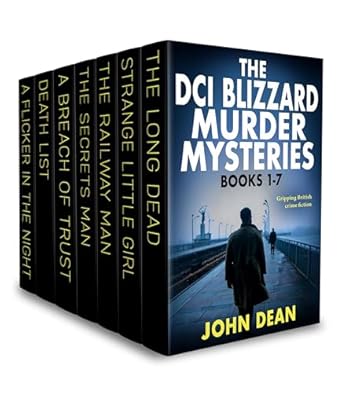
The first seven John Blizzard novels are available in an ebook format boxset for £6.99 on Amazon. Key in The DCI Blizzard Murder Mysteries 1-7 at https://www.amazon.co.uk to purchase your copy.
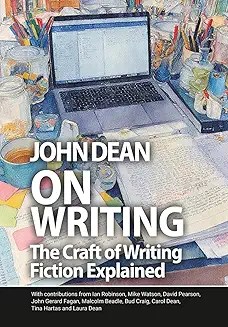
These Handy Hints sections are offered for emerging writers to use absolutely free of charge and I will add to them from time to time. If you find them useful, I have brought everything I know about the craft of fiction into a book called On Writing. Covering everything from creating plot and place to characters and tension, from how to beat writers’ block and how to translate the author’s personal experience into compelling fiction, from taking in an overview of the opportunities presented to emerging writers by the dramatic changes in the publishing industry and including my thoughts on approaching publishers and agents and preparing manuscripts for self-publishing, the book is available in ebook (99p) and paperback £5.00 formats on Amazon. On Writing also has expert contributions from authors, publishers, editors and experts working with literary organisations and builds into a compendium of valuable advice for writers seeking their big breakthrough. You can also hire editing, mentoring and proofing services through me. Details are included in the Editorial Services page on the main menu.
 John Dean - Crime Writer