January 15, 2026

A spot of self-indulgence – making use of light and dark
Those emerging authors who read my blogs containing handy hints about the craft of writing will know that one of my regular themes is discipline, the relentless pursuit of getting everything right in a manuscript.
That is as it should be, but there is also a strong argument for regular reminders that writing should be fun, hence the, perhaps unexpected, appearance of a classic Ferrari on my website.
The reason is that sI have been working on the latest book in the DCI Jack Harris series of crime novels published by The Book Folks, a Joffe Books company (the next title in the DCI John Blizzard series is due to appear later in the year, same publisher) and, without giving too much away, one of the storylines involving Harris and his team of investigators deals with classic cars.
This has allowed me the opportunity to take a slight side-step away from the main plot and ask my son Michael (who has long since left childhood behind but who appears as toddler Mikey, the DCI’s s son, in the Blizzard novels) to recommend a high value car – he has always been interested in classic cars and knows his stuff.
And what a car he selected! Few modern supercars have achieved the cultural and historical significance of the Ferrari F40, which was introduced in 1987 to celebrate the 40th anniversary of Ferrari and was developed under the supervision of the legendary Enzo Ferrari himself.
Technically revolutionary, the most important F40s continue to command extraordinary prices within the collector market, with the six most expensive Ferrari F40s sold at RM Sotheby’s in 2025 going for more than $2 million each.
Not that all the wealth of background about the cars will featured in the DCI Harris novel but a couple of lines made it and prompted a nice scene as myself, as the author, was able to indulge in thinking about something lighter for a few moments before returning to the darker themes.
I was also able to offer the same opportunity to the reader – and post a picture of a Ferrari on my website, which always adds a touch of class.
More relaxed scenes are vital tools for the writing process, particularly in the work of those authors such as crime writers whose themes are mainly sinister.
Why? For a start, they can create light against the dark. Take an example: you are writing a sinister piece with the tension building as the tale unfolds. You might decide to keep the tension going right to the end, which would be one way of writing it and would certainly keep your reader with you. However, you might decide to be sneaky, concluding that a flash of humour, a single line of dialogue from a character, a light-hearted quip, could momentarily ease the tension, cause the reader to relax slightly and provide an even greater impact when you suddenly strike with the next piece of drama, or horror or fear, in the next line.
There is another good reason for using lighter passages containing humour in your writing, namely that it reveals things about your characters’ personalities. The use of humour can show another side to them that the reader might not have witnessed before or has seen before but not often so they appreciate it when it happens again. I know that my readers appreciate this because they often mention the light-hearted banter between characters in their Amazon reviews.
But what, I hear the authors among you say, if I can’t write humour? It is certainly the case that a straight-laced, humourless person might well struggle to write side-splitting comedy but if you are an author, that might not be a good enough excuse because, like it or not, humour is vital to creating good fiction. Even if you are not writing an out-and-out comic piece, humour has a vital role to perform.
We can’t all be Tom Sharpe but that should not stop us trying. It does not need to be side-splitting humour but that is not the intention of comedy in serious fiction: it has other roles to perform, as we have seen.
Another thing to remember is that humour is subjective. What is funny to one person may easily leave another cold. The best approach is to write in your own style, sticking with the language that pleases you. If it makes you smile, then there will be an audience out there who will plug right in to what you’re offering. Not everyone, but enough.
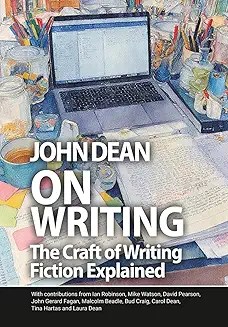
These Handy Hints sections are offered for emerging writers to use absolutely free of charge and I will add to them from time to time. If you find them useful, I have brought everything I know about the craft of fiction into a book called On Writing. Covering everything from creating plot and place to characters and tension, from how to beat writers’ block and how to translate the author’s personal experience into compelling fiction, from taking in an overview of the opportunities presented to emerging writers by the dramatic changes in the publishing industry and including John’s thoughts on approaching publishers and agents and preparing manuscripts for self-publishing, the book is available in ebook (99p) and paperback £5.00 formats on Amazon. On Writing also has expert contributions from authors, publishers, editors and experts working with literary organisations and builds into a compendium of valuable advice for writers seeking their big breakthrough. You can also hire editing, mentoring and proofing services through John. Details are included in the Editorial Services page on the main menu.
 John Dean - Crime Writer