March 30, 2026
Campaign backs school libraries law change
The Scottish Book Trust is seeking support for its campaign to ensure that it becomes a legal requirement for Scottish secondary schools to provide their own library.
No such requirement exists at the moment but the trust says that recent research highlights that school libraries play a vital role in supporting pupil well-being beyond academic achievement but face significant challenges, including declining budgets and staffing.
The trust’s research demonstrated how school librarians cultivate a lifechanging love of reading by understanding pupils’ individual interests and matching them with appropriate books. They make reading relevant by connecting literature to pupils’ lives outside school, including their hobbies, interests and current trends. This approach combats negative attitudes toward reading that often develop during teenage years, says the trust.
Libraries also serve as safe spaces, which is particularly important during the difficult transition to secondary school and for pupils with additional learning needs or marginalised identities. By supporting pupil autonomy and encouraging ownership over library activities, librarians also help teenagers develop independence.
The campaign to make school libraries a legal requirement for all of Scotland’s secondary schools is backed by the School Library and Education Policy Group, the National Library of Scotland, the Scottish Libraries and Information Council (SLIC) and the Chartered Institute of Library and Information Professionals (CILIPS) in Scotland.
More details of how you can become involved can be found at https://www.scottishbooktrust.com/
As the Crime Writers’ Association’s Libraries Champion in Scotland, I urge people to offer their support.
March 1, 2026
Longlist announcement due in April
Voting has closed for this year’s Dagger in the Library crime writing award. Run by the Crime Writers’ Association (CWA), the award begins when library staff and volunteers in the UK and Ireland nominate authors, often following discussions with borrowers, working to a criteria which seeks to identify crime writers of fiction or non-fiction who have brought most pleasure to UK and Irish library users over a significant time, and who have actively supported libraries.
Each library then has the chance to vote to narrow down the nominations to create the longlist, a process that has now finished.
The longlist is due to be announced on 16 April 2026, followed by the shortlist on May 29 and the winner at the Daggers Awards in July 2026.
Crime writer John Dean, who lives in Dumfries and Galloway and is the CWA’s Libraries Champion in Scotland, said: ‘The expertise and enthusiasm of the people who work in, and use, our libraries make this Dagger award the success that it has become, and we very much appreciate their support.’”
Previous winners cannot be considered for the award again. The 2025 prize went to Richard Osman.
December 20, 2025
Young school librarians help with preparations for National Year of Reading
Preparations are well under way for the beginning of the National Year of Reading 2026, which aims to tackle the steep decline in reading for enjoyment among readers of all ages.
The campaign is being run by the National Literacy Trust and the Department for Education under the rallying call Go All In, which was developed in collaboration with independent creative agency Fold7 to encourage people to adopt a new way of viewing reading.
Jonathan Douglas, Chief Executive of the National Literacy Trust, said: ‘Go All In captures exactly the kind of energy and optimism we need to transform how the nation sees reading. This is about making reading feel relevant, exciting and rewarding right now, not just in the future.’
The campaign builds on research that showed that the decline in reading and reading enjoyment is largely due to loss of motivation; just 9% of readers in a survey by the National Literacy Trust said that they believed that reading helps them spend time with others, and fewer than 1 in 5 said that it helps them feel connected with the world.
Yelena Gaufman, Chief Strategy Officer at Fold7, said. ‘Reading doesn’t seem to offer the immediate, social rewards that motivate us today. It’s seen as slow, solitary, and studious in a world that values speed, status and spectacle. Historically, campaigns encouraging literacy have focused on the long-term benefits of reading – its ability to make you more knowledgeable, creative or successful. But these messages seem increasingly out of step with a culture that values immediate rewards and demands entertainment, right now.’
David Hayman, Director of the National Year of Reading, said: ‘Reading is one of the most powerful tools we have to connect, create and grow, but right now, too many people are switching off from it. We want to reimagine reading as something modern, meaningful and social. This campaign is about reaching people where they are and inviting them to rediscover the power - and joy - of reading.’
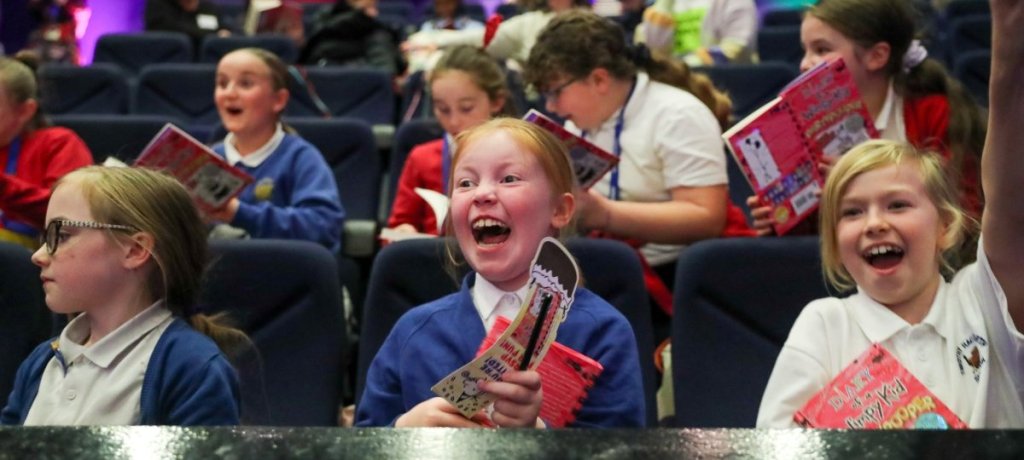
A large part of the campaign will be working with children and, as part of that, fifty pupils from 12 County Durham schools attended its first ever Pupil Librarian Conference at Durham’s Gala Theatre.
The schools had all taken part in the World of Stories – part of the Libraries for Primaries initiative – and the children were treated to a surprise visit from award-winning children’s author Jeff Kinney (pictured here), as part of his global tour promoting the 20th book in his popular Wimpy Kid series –Partypooper.

Each school that takes part in Libraries for Primaries is encouraged to appoint pupil librarians to support the running of their school library. Since the start of the Libraries for Primaries campaign in 2021, thousands of pupil librarians have been trained and are now championing reading.
Jeff Kinney appeared in person after tricking the children into believing he was joining via remote video link and the pupils and their teachers joined in a number of games in which they won hundreds of books and other prizes.
He said: ‘A school library is one of the first places a kid can really make their own choices. A kid can go in and pick out the thing that they like. You can make your own choices and a lot of the time, those choices that you make lead to interests, hobbies or even careers.’
Lucy Starbuck Braidley, Head of School Libraries at the National Literacy Trust, said:
‘Appointing pupil librarians in a primary school is a wonderful way to develop pupil’s leadership skills, literacy, and foster child-led community engagement in reading. When children are given opportunity to contribute to their library, it is often a transformative and empowering experience, creating a ripple effect in the school’s wider reading for pleasure culture.’

December 19 2025
Looking forward to an excellent 2026 in our libraries
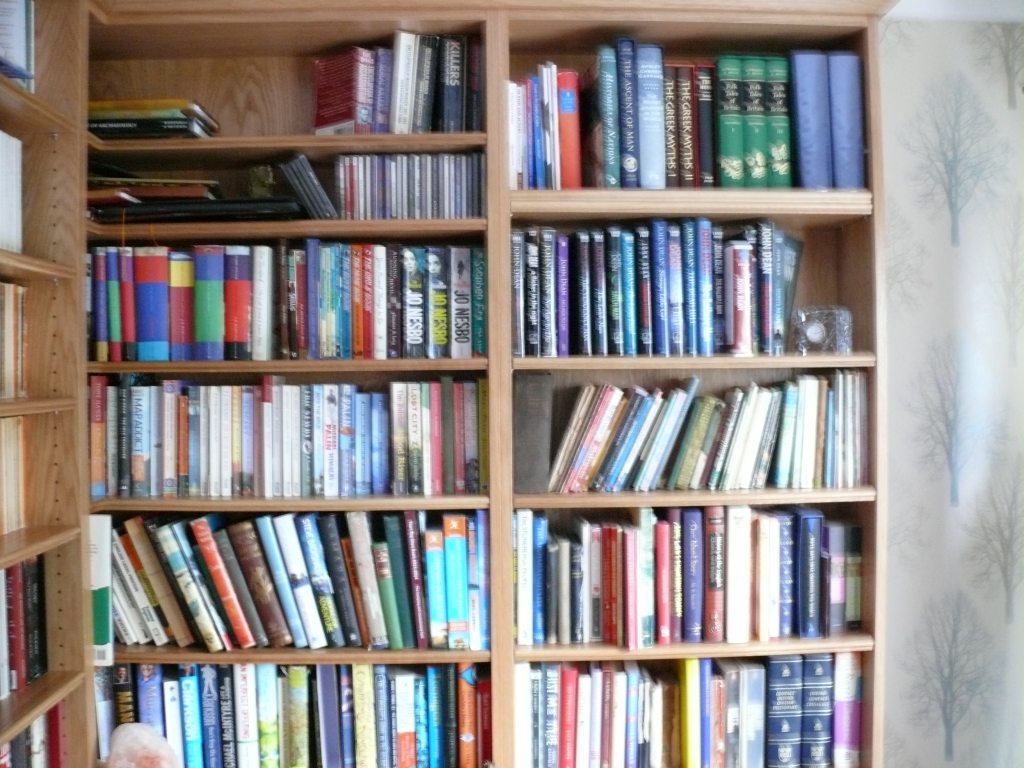
I have always been a huge fan of libraries – my father was a chief librarian, my first summer job was in my local library and many years later, as a volunteer, I played a role in the successful campaign to save that library, and one other in the same town, which had been under threat of closure as part of council cutbacks.
In addition, I have worked with a number of libraries as a crime writer and have been the Crime Writers’ Association Libraries Champion in Scotland for a number of years, one of several Champions across the UK that create a link between the CWA and libraries.
Through it all, I have been struck by the level of expertise and commitment that people who work in libraries bring to their jobs and, as part of my Champion role, I get to see some of the crime writing events that library staff and volunteers have been putting together for 2026.
It’s exciting stuff, including year-long programmes of talks and a number of mini-festivals, and I’ll post details on my website as they become available.
There are other things involving libraries which will add to the offer in 2026, one of which is voting for the CWA’s annual Dagger in the Library crime fiction award early in the New Year.
Run by the Crime Writers’ Association, the award’s success is down to library staff and volunteers in the UK and Ireland who nominate authors, often following discussions with borrowers, then vote to narrow down the nominations to create the long list. Richard Osman won the 2025 prize and the 2026 long list will be announced in April. More information is available at www.thecwa.co.uk
June will stage the 2026 version of National Crime Reading Month, organised by the CWA and its partners and providing a month of crime writing events featuring many authors and all sorts of venues, including plenty of libraries. Information will be published in due course at www.crimereading.com and I’ll post details here as well.
Campaign champions the role of libraries

A campaign backed by a range of organisations is championing the work carried out by Scotland’s libraries.
Love Libraries is being promoted by organisations including the Chartered Institute of Library and Information Professionals (CILIPS) in Scotland, the National Library of Scotland (as part of its centenary celebrations in 2025), the Scottish Library and Information Council, the Scottish Confederation of University and Research Libraries, the Association of Public Libraries in Scotland, Young Scot and the Scottish Book Trust.
A large part of the campaign is a collection of case studies of activities in Scottish libraries, ranging from crime fiction clubs and children’s storytelling sessions to health and well-being projects and community garden groups as well as a variety of assistance with new technology. The case studies can be found at cilips.org.uk
Love Libraries is being run at a time when many libraries are facing the possibility of closure and cutbacks and among authors supporting the campaign is crime writer John Dean, who lives in Dumfries and Galloway and is the Libraries Champion in Scotland for the Crime Writers’ Association (CWA).
He said: “Never has it been more important to support our libraries and the work that they do and I know that many authors deeply appreciate the way that libraries have supported them.
“Talk to any writer working in any genre, from international best-seller to authors just starting out, and they will all readily agree that libraries have helped them, connect with their readers.”
CILIPS says: “Scotland’s libraries are the heart of our communities, schools and higher education institutions, offering a wealth of resources and services. The Love Libraries campaign aims to celebrate the successes and legacies of libraries. We want to reinforce the value of libraries and library staff, engender public appreciation, encourage greater use of libraries, promote fun and wellbeing and champion and raise awareness of library services.
“We hope to reach people who don’t know what a positive impact libraries could have on their lives, such as reducing social isolation or helping them gain new skills, and, therefore, don’t use a library.
“We also want to engage those people who enjoy reading and support libraries, but don’t necessarily use their library, and also those people who do love, use and value their libraries – and encourage them to share why.”
John Dean’s work with libraries on literature-based projects includes supporting his local library in Kirkcudbright, Dumfries and Galloway, which runs a young writers’ short story competition run jointly with the organisers of Kirkcudbright’s annual book festival.
He said: “The case studies in the Love Libraries campaign are truly inspiring, making the point, as they do, that libraries are about so much more than books. They sit at the heart of our communities and we should treasure them.”
There are three national CWA Libraries Champions, with the others being Priscilla Masters in England and GB Williams in Wales. They provide a conduit between libraries and the Board of the CWA and help libraries promote themselves through enabling CWA members to participate in their events. This is often through providing names of local author members on the CWA’s members database to libraries seeking to book authors for events, including talks.
The CWA, which does not take a political stance, is nevertheless concerned about the impact of continued cuts to library services throughout the United Kingdom and is fully supportive of the ongoing efforts of the Society of Authors to draw attention to the issue.
The Champions are also involved in promoting the CWA’s annual Dagger in the Library award, which is based on nominations from library staff, volunteers and readers. It is one of the most prestigious crime writing awards in the UK and previous winners include Belinda Bauer, Stuart MacBride, Alexander McCall Smith, Peter Robinson, Lindsey Davis, Martin Edwards, Chris Brookmyre, Anthony Horowitz and, most recently, Richard Osman.
You can find out more about the CWA’s work to support libraries at
Libraries – The Crime Writers’ Association
Success for Richard
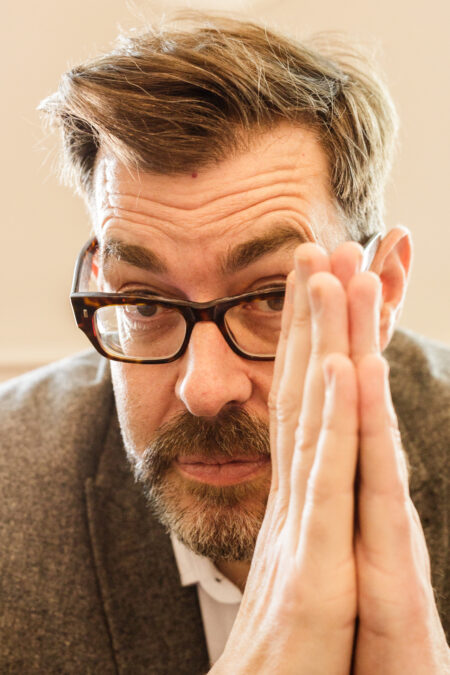
The Crime Writers’ Association has announced that this year’s (2025) prestigious Dagger in the Library award, which is based on nominations by libraries and borrowers in the UK and the Republic of Ireland, has gone to television-personality-come-author Richard Osman.
The Dagger in the Library is a prize for a body of work by an established writer of crime fiction or non-fiction who is popular with borrowers from libraries. It also rewards authors who have supported libraries and their users through taking part in library events.
You can see the winners for all the Daggers at
.Home – The Crime Writers’ Association
Report highlights value of libraries
A report into Scotland’s public and school libraries has underlined their importance to the communities they serve.
The Scottish Book Trust’s survey of 2,000 library users, carried out in partnership with the National Library of Scotland, the Scottish Library and Information Council and the Chartered Institute of Library and Information Professionals in Scotland, found that 90% of respondents said that their library inspires their love of reading ‘a lot’.
More than 80% reported that their library saves them money ‘a lot’ and 92% viewed their local library as a safe space.
Worryingly, the researchers received many comments from people concerned with the imminent or recent closure of libraries – the report said that 97 of Scotland’s public libraries closed between 2008 and 2024 (more than 1 in 8, or 16%).
One in three librarians reported that their whole service is at risk of reduction or losses and 82% – 4 in 5 librarians – reported a restriction in their funding and resources.
The report said that libraries are filling their communities’ unmet needs in the wake of social cuts, deprivation and digital poverty, particularly for isolated or immobile aging people, and can be a peaceful haven for many users.
It says that libraries in smaller or more remote communities are often the only place for people to find community and support and that shutting these libraries down fails to recognise the impact on those who use the service.
Many of the replies highlighted the work that libraries do to support mental health and provide access to learning and recreation for both children and adults.
A total of 60% of librarians and 88% of library users indicated that libraries were ‘quite’ or ‘very important’ in providing further education and learning opportunities.
Two in three librarians (66%) reported their community faces digital poverty and many library users referred to their library as a lifeline for digital access. A total of 96% of librarians who took part reported that their library offers access to Wi-Fi, 98% to computers with internet, 70% to ebooks/eReaders and 95% to photocopying/printing scanning.
Recommendations in the report include a call for the Scottish Government to ensure that it empowers local authorities across Scotland with sufficient funding and resources.
John Dean is the Crime Writers’ Association’s Libraries Champion in Scotland
 John Dean - Crime Writer