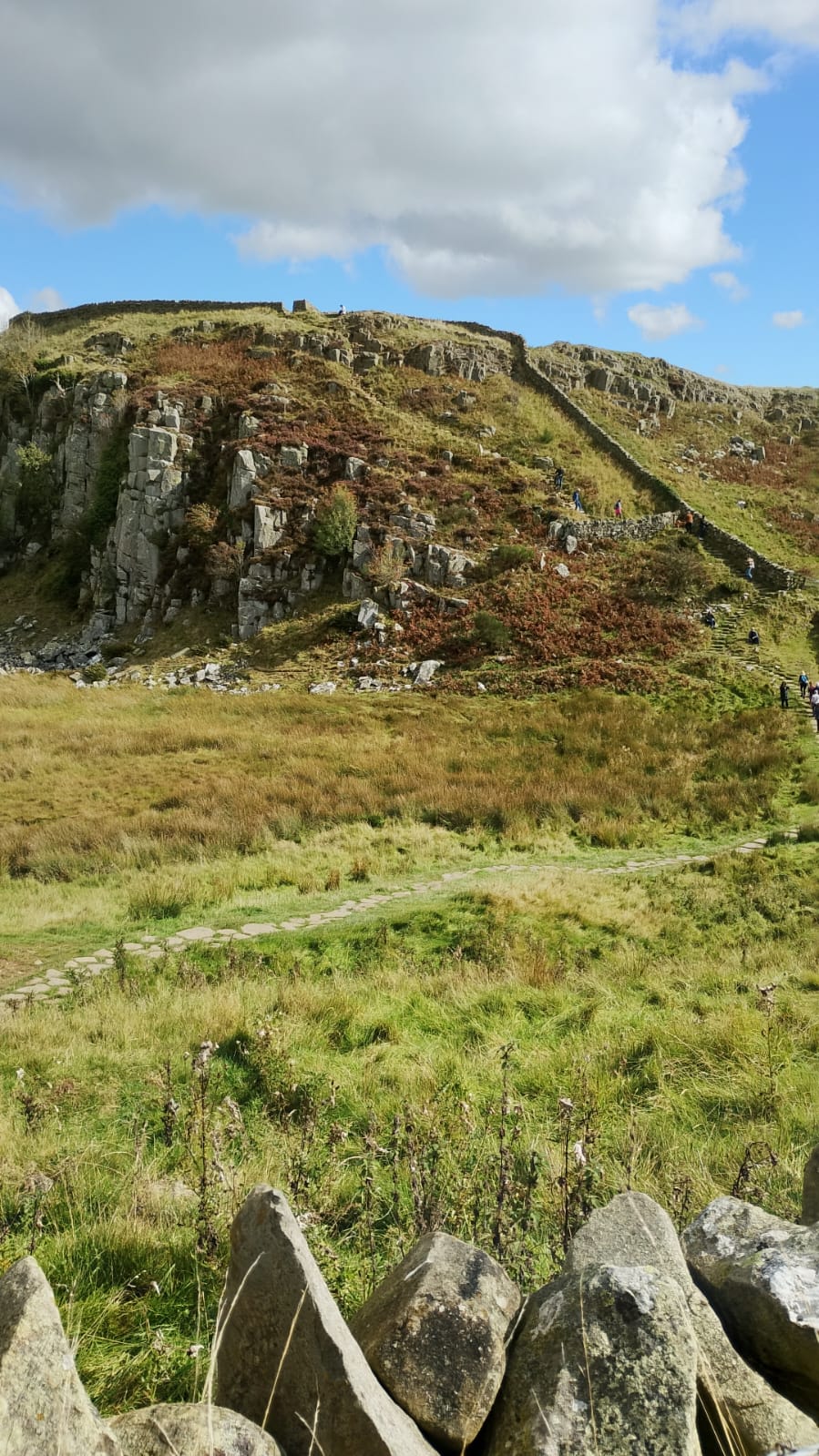
Picture: The North Pennines (setting for my DCI Jack Harris crime novels) by Frances Griss
I am sensing an interesting, and hugely encouraging, change in the way many publishers react to their readers when it comes to the way description of place is used.
Sense of Place is important to me, as a writer, because it inspires many of my ideas and also gives readers a strong sense of being there, as happens in the work of crime writer David Pearson, whose latest novel I will be reviewing when it is published in the next few days (I’ll put it in my Review section as well as on Amazon).
As David, author of the hugely popular Galway Homicide series, published by Joffe Books, wrote in his contribution to my book on the craft of fiction, On Writing.: ‘By treating the landscape and other details about the area as an important character in the books, I hope to get the reader really involved in the story to the extent that they can imagine actually being there, and living some of the experiences of the protagonists and even the victims.’
Sense of place has had to work hard for its place on the page in recent times with some publishers concerned that the modern reader does not want much description in their novels.
However, publishers such as Joffe, who also publish my work, have sensed that readers like description, either of places they do not know or do know or are familiar with and wish to be reminded about.
So what is driving this change in thinking? Well, it’s the factor that drives all publishers – book sales. If readers are saying they want more description, and many are, then that’s what they shall have.
There are two ways of approaching the subject if you are an author. As shown by the trend outlined above, one argument contends, and with much merit in my view, that description handled well by a skilled wordsmith has a place in modern novels and that longer passages of description can still make for compelling reading. To see what I mean, check out the novels by Scottish crime writer Peter May, whose richly evocative descriptions of the Highlands and Islands show a true master at work. Away from crime fiction. it is worth reading the books by Laurie Lee, best known for his 1959 title Cider with Rosie and As I Walked out one Midsummer Morning, which came out a decade later, and I defy anyone to read the opening pages of Charles Dickens’ 19th Century novel Great Expectations and argue that extended description has no place in literature. They are all among the finest passages of description in the English language, were when they were written and will stand the test of time in the years to come.
The second school of thought – which, also has much to recommend it, and they can complement each other – is that description of places should be short and sharp, not overdone, because the modern reader is already bombarded with imagery on their computers and smart phone.
Those who argue that shorter is better say that too much description can slow a story’s pace and deter the reader. However, you still need to provide some clues so if you are an emerging writer learning your craft identify what you think are the most important things are about a place and describe them. Even if you do it sparingly, the reader’s imagination will build up the full picture because good writing is about triggering a response in the reader, often bringing out memories of places they have visited.
Among the people championing the re-emergence of Place is the team behind the Trip Fiction website (www.tripfiction.com), which helps readers to search for books by location and not author when they are arranging holidays and short breaks around the location of literary works, both in the UK and abroad.
Also writing in my book On Writing, Tina Hartas, one of the Trip Fiction team, said: ‘Literary Tourism is certainly gaining traction. People are searching for new and different angles when it comes to planning trips, and exploring a location through literature is proving increasingly seductive. Immersion into place through literature is a wonderful way to gain greater understanding. Picking up a novel before a trip makes for great anticipatory preparation (a reader might even find some top tips for their visit). Reading whilst in the chosen location adds a sensory element, a 3-D experience, and then, upon return, a book can help reconnect with personal memories. Reading literature with a strong sense of place is a great way to ‘travel’.’


Leave a comment